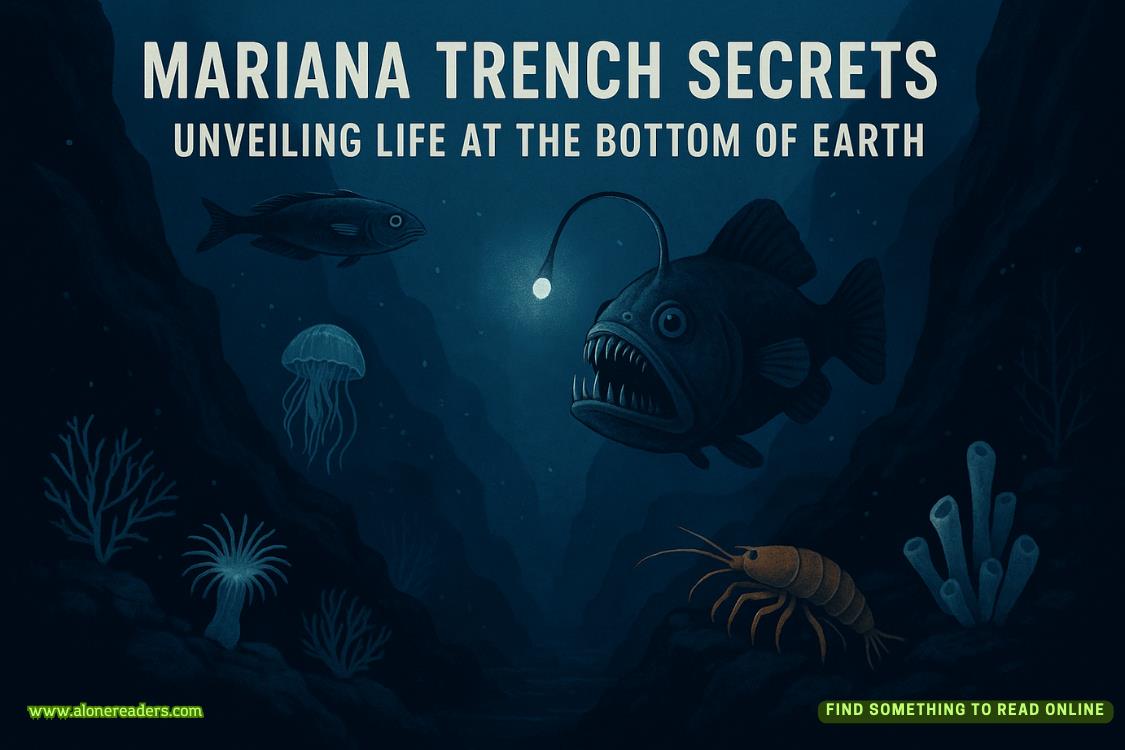
The Mariana Trench is Earth’s deepest oceanic point, a place shrouded in mystery and awe. Stretching nearly 36,000 feet below sea level at its deepest point, the Challenger Deep, this vast undersea canyon lies in the western Pacific Ocean east of the Philippines and south of Japan. Despite decades of exploration, the trench continues to puzzle scientists and explorers, holding secrets about the origins of life, the adaptability of organisms, and the extremes our planet is capable of sustaining. To understand the trench is to peer into one of the last true frontiers of Earth’s environment, a region that combines immense pressure, darkness, and frigid temperatures with surprising signs of resilience and vitality.
The trench is the product of tectonic processes, specifically the subduction of the Pacific Plate beneath the smaller Mariana Plate. This geological collision has created a crescent-shaped scar in the seafloor, stretching about 1,550 miles long and up to 45 miles wide. While the trench itself is an imposing physical feature, its significance lies in the fact that it represents an environment so hostile that, until recent decades, many believed life there was impossible. The reality is far more fascinating: life not only exists at the bottom of the Earth but thrives in unexpected ways.
The pressure at the trench’s deepest points is more than 1,000 times the standard atmospheric pressure at sea level. Temperatures hover just above freezing, and sunlight never penetrates these depths. Yet, organisms here have evolved remarkable adaptations. Amphipods, snailfish, and giant microbes have been discovered in abundance, each demonstrating biological strategies that defy traditional limits of survival. Snailfish, for example, possess flexible bones and a unique cellular structure that allows them to withstand crushing forces. Amphipods contain specialized enzymes that protect their DNA from pressure-induced damage. These adaptations reveal not just resilience but evolutionary brilliance in one of Earth’s harshest environments.
Microbial life in the trench is equally astonishing. Microbes flourish around chemical energy sources rather than sunlight, making use of compounds like methane, hydrogen, and sulfur seeping from the seabed. These extremophiles demonstrate how life might exist in alien environments, such as beneath the icy crusts of Jupiter’s moon Europa or Saturn’s moon Enceladus. Some scientists believe that studying trench microbes may unlock clues about the origin of life itself, suggesting that life can emerge and thrive even in the absence of traditional energy sources like sunlight.
Another secret of the trench lies in the abundance of marine snow, the constant descent of organic material from the ocean’s upper layers. This material provides a lifeline for the creatures below, forming a slow but steady food chain in a world that otherwise seems desolate. In addition, the carcasses of large animals, such as whales, sometimes drift to the trench floor, creating localized ecosystems that can last for decades as scavengers, bacteria, and opportunistic species feed and recycle nutrients. These temporary oases provide an extraordinary glimpse into the interconnectedness of ocean ecosystems from surface to abyss.
However, not all discoveries in the Mariana Trench inspire awe alone; some raise concerns about humanity’s footprint on even the most remote parts of Earth. In 2019, researchers found plastic bags and other debris at the trench’s deepest points, evidence that human activity has polluted even the most inaccessible corners of the planet. Chemical pollutants such as PCBs and microplastics have been detected within the tissues of amphipods, highlighting how pervasive pollution has become. These findings emphasize the urgent need for global environmental responsibility, reminding us that no place on Earth is entirely untouched by human influence.
The trench also offers secrets about Earth’s geological and chemical systems. Deep-sea exploration has revealed hydrothermal vents and mud volcanoes along the trench’s margins. These geological formations release mineral-rich fluids and gases, supporting unique ecosystems dominated by tube worms, clams, and microbial mats. These vent communities illustrate the possibility of life fueled not by sunlight but by the energy of the planet itself. Studying them enhances our understanding of biogeochemical cycles and deepens our appreciation for the complex relationships between Earth’s geology and biology.
Exploration of the Mariana Trench has been rare and challenging due to the extreme pressures and technical difficulties involved. Only a handful of manned expeditions have reached the Challenger Deep, including Jacques Piccard and Don Walsh in 1960 aboard the bathyscaphe Trieste, and James Cameron’s 2012 solo descent in the Deepsea Challenger. These historic journeys have paved the way for more advanced robotic and remote-operated vehicles that now probe the trench, mapping its features and cataloging its inhabitants. Each mission uncovers something new, from undiscovered species to geological formations that reshape our understanding of Earth’s evolution.
The trench’s mysteries extend beyond biology and geology. Scientists are investigating its potential role in global climate systems, particularly how carbon is sequestered in the deep ocean. Organic carbon sinks into the trench and becomes buried in sediments, effectively storing greenhouse gases for millennia. Understanding these processes could help refine climate models and deepen insight into how Earth regulates itself. The trench is not just a scientific curiosity but a critical component of planetary balance.
From a cultural and philosophical perspective, the Mariana Trench captures the imagination like few other places on Earth. It represents the ultimate unknown, a reminder that despite all technological progress, vast portions of our world remain unexplored. The trench’s alien-like creatures and extreme environment challenge human perceptions of life’s limits, fueling not only scientific inquiry but also inspiration in art, literature, and film. It embodies the spirit of exploration, showing that the pursuit of knowledge often leads us into the most unlikely and humbling environments.
The secrets of the Mariana Trench are far from exhausted. With each new descent, researchers reveal more about the resilience of life, the dynamics of Earth’s systems, and the consequences of human impact. It is both a place of wonder and warning, demonstrating the richness of our planet while reminding us of our responsibility to protect it. The trench may lie at the bottom of the Earth, but the lessons it holds rise to the very top of human importance.



 Château de Vincennes: France’s Forgotten Royal Fortress and Medieval Stronghold
 Château de Carcassonne: Europe’s Greatest Medieval Citadel and Fortress
 Château de Chenonceau: The Castle Built by Remarkable Women
 Château de Chambord: France’s Magnificent Renaissance Castle and Architectural Wonder
 Tehri Dam: India's Tallest Dam and the Debate Behind It
 Bhakra Nangal Dam: India's Temple of Modern Development










