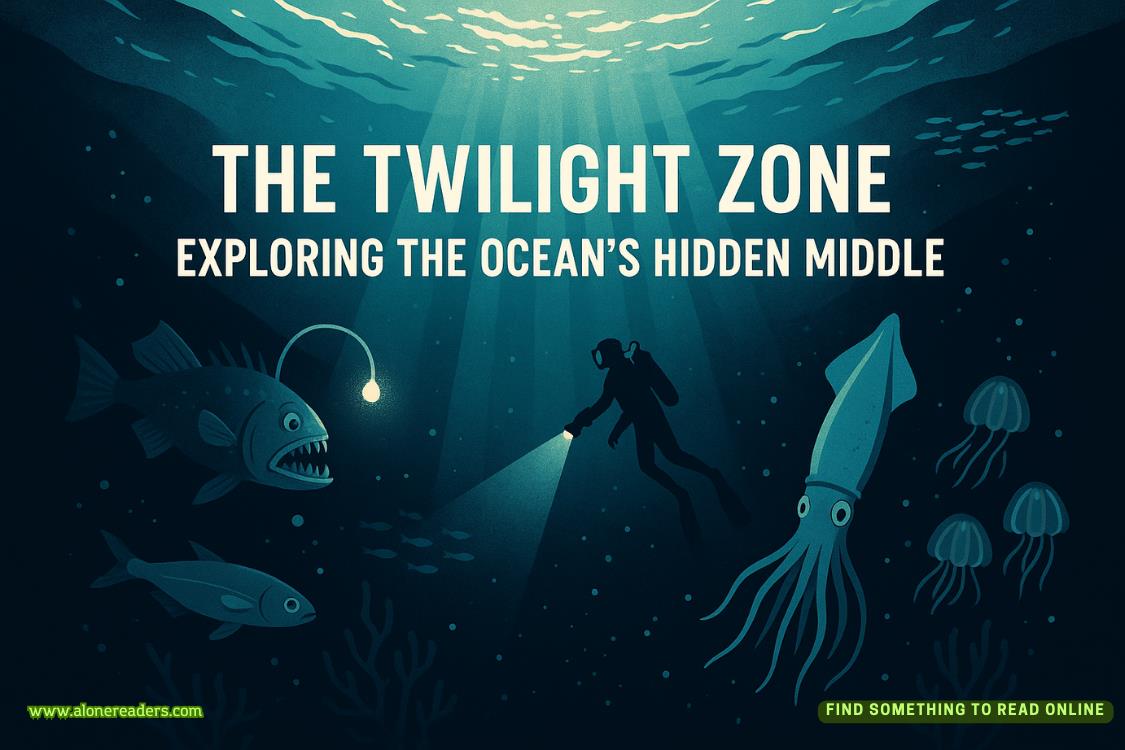
The ocean covers more than seventy percent of Earth’s surface, yet much of it remains unexplored and poorly understood. While many people are familiar with the sunlit surface waters where photosynthesis occurs, few are aware of the twilight zone, also known as the mesopelagic zone. This mysterious region lies between two hundred and one thousand meters below the ocean surface, sandwiched between the brightly illuminated epipelagic zone above and the dark abyssal depths below. It is a place of dim, filtered light where sunlight fades but does not entirely disappear, and it harbors a stunning array of lifeforms, ecological processes, and hidden mysteries that scientists are only beginning to unravel. The twilight zone represents one of the largest ecosystems on Earth, and yet, paradoxically, it remains one of the least studied.
In this dimly lit region, sunlight is too weak to support photosynthesis, but it is strong enough to allow the silhouettes of creatures to be faintly visible. This unique lighting environment has driven the evolution of extraordinary adaptations in marine organisms, particularly the development of bioluminescence. Countless species, from shrimp to jellyfish to fish, produce their own light using specialized organs. These bursts of blue or green glow are used for communication, camouflage, luring prey, or confusing predators. The twilight zone is therefore one of the most visually spectacular parts of the ocean, where life is conducted under the constant flicker of living light shows. One of the most fascinating examples is the lanternfish, a small but abundant species that uses light-emitting organs along its body to break up its outline, blending seamlessly with the faint downwelling light from above.
The twilight zone is not only rich in bioluminescent displays but also in biomass. It is estimated that the mesopelagic zone contains more fish than all the world’s fisheries combined, yet most of this potential resource remains untouched. Species such as bristlemouths, hatchetfish, and lanternfish exist in staggering numbers, forming a key link in global food webs. These creatures often engage in diel vertical migration, the largest animal migration on the planet. Every night, trillions of twilight zone organisms move upward toward the surface to feed under the cover of darkness, then retreat back into the depths by daybreak to avoid predators. This daily movement not only sustains predators like tuna, squid, and whales but also plays an important role in regulating Earth’s climate.
One of the most critical functions of the twilight zone lies in its role in the biological carbon pump. As organisms consume carbon-rich plankton at the surface and then descend back into the twilight depths, they transfer carbon dioxide away from the atmosphere and into the deep ocean. This process sequesters carbon for decades or even centuries, acting as a natural climate regulator. Scientists believe that without the twilight zone’s role in storing carbon, global climate change would be even more accelerated than it already is. Understanding this dynamic is therefore not only a matter of marine biology but of planetary survival.
The twilight zone, however, is not immune to human impact. Although it has remained largely untouched until now, interest in exploiting its resources is growing. Some countries and corporations have begun investigating deep-sea fishing of twilight zone species, particularly lanternfish, to be processed into fishmeal and animal feed. The consequences of such exploitation are unknown but could be devastating. Because the twilight zone is a crucial link in marine ecosystems and climate regulation, disturbing its delicate balance could lead to far-reaching consequences that ripple across the planet. Scientists are therefore urging caution, advocating for more research and international regulation before commercial exploitation expands.
Studying the twilight zone is no simple feat. Its depth makes it too dark for satellites to observe, yet too shallow for many deep-sea submersibles to operate efficiently. Traditional trawling nets often damage delicate organisms, and many species disintegrate before they can even be studied. However, new technologies are beginning to reveal its secrets. Remotely operated vehicles, advanced sonar systems, and specialized sensors are allowing researchers to glimpse the twilight zone as never before. Programs like the international “Deep Ocean Observing Strategy” aim to map and monitor this hidden layer, offering the possibility of uncovering unknown species and ecological processes that could redefine our understanding of the ocean.
The twilight zone is not only a biological treasure but also a source of wonder that challenges our perception of life on Earth. The creatures inhabiting this realm often seem alien, with enormous eyes adapted to detect faint glimmers of light, transparent bodies that make them invisible to predators, and terrifying anatomical features like needle-sharp teeth or extendable jaws. For many people, seeing images of anglerfish with glowing lures or hatchetfish with shimmering silver scales invokes the sense of encountering beings from another planet. Yet these organisms are not alien—they are integral members of Earth’s biosphere, evolved to survive in one of the most extreme and least forgiving habitats on the planet.
Beyond its ecological importance, the twilight zone has become a source of inspiration for science, art, and even philosophy. Writers and filmmakers have long drawn upon the mystery of this dimly lit realm to symbolize the unknown, the subconscious, or the hidden layers of human existence. For scientists, it serves as a reminder of how much remains undiscovered in our own world. Despite decades of exploration, estimates suggest that as much as ninety percent of twilight zone species remain undescribed. Each new expedition uncovers bizarre and unexpected lifeforms, highlighting how incomplete our knowledge still is.
As we look to the future, the twilight zone may hold keys to solving global challenges. Its organisms harbor biochemical compounds that could be useful for medicine, biotechnology, or sustainable materials. Its processes could inform better climate models and conservation strategies. Yet it also stands as a fragile frontier, one that could be easily disrupted by short-sighted exploitation. Protecting the twilight zone is therefore not just an environmental priority but an ethical imperative. It embodies the intersection of natural wonder, scientific discovery, and planetary stewardship.
In the end, the twilight zone is far more than a hidden middle layer of the sea. It is a vast and dynamic ecosystem that sustains global food webs, regulates climate, and inspires human imagination. Exploring it is not merely an act of curiosity but a step toward understanding the interconnected systems that make life on Earth possible. The twilight zone reminds us that the ocean is not just a surface we see but a layered universe of hidden worlds, each with its own mysteries waiting to be revealed. To explore the twilight zone is to peer into one of the last great frontiers of our planet, and in doing so, we deepen our awareness of the fragile balance that sustains all life on Earth.



 Château de Vincennes: France’s Forgotten Royal Fortress and Medieval Stronghold
 Château de Carcassonne: Europe’s Greatest Medieval Citadel and Fortress
 Château de Chenonceau: The Castle Built by Remarkable Women
 Château de Chambord: France’s Magnificent Renaissance Castle and Architectural Wonder
 Tehri Dam: India's Tallest Dam and the Debate Behind It
 Bhakra Nangal Dam: India's Temple of Modern Development










