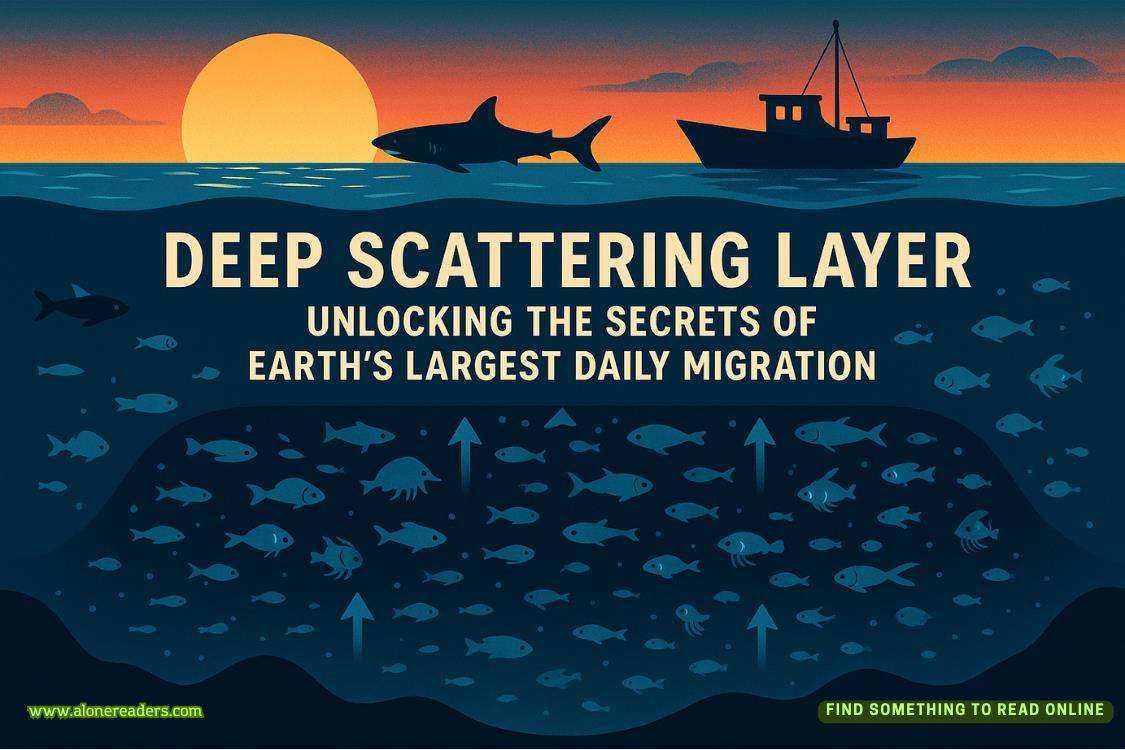
The deep scattering layer is one of the ocean’s most intriguing mysteries, a hidden world that eluded scientists for decades and continues to challenge our understanding of life beneath the waves. Stretching across much of the globe’s oceans, this vast band of marine organisms moves up and down the water column in a synchronized daily cycle, performing what is often called the largest migration on Earth. Despite its importance, the phenomenon remains largely invisible to human eyes, detected mainly through sonar, scientific surveys, and deep-sea expeditions.
The story of the deep scattering layer begins during World War II, when naval sonar operators noticed strange “phantom” readings beneath the surface of the sea. Instead of mapping the seafloor, sonar often picked up a false bottom that shifted upward at night and downward during the day. At first, scientists believed this was a quirk of sound waves, but further investigation revealed something extraordinary. The mysterious layer was not rock or sediment but dense clouds of living organisms, ranging from small fish and shrimp-like crustaceans to squid, jellyfish, and other planktonic creatures. This discovery completely reshaped our understanding of ocean life and revealed the presence of one of the most biologically rich habitats on Earth.
The diel vertical migration of the deep scattering layer follows a predictable rhythm. At night, billions of organisms rise toward the surface, feeding on phytoplankton and other microscopic life nourished by sunlight. As dawn approaches, they retreat back into the twilight zone, also called the mesopelagic, which lies between 200 and 1,000 meters below the surface. This massive movement is driven by survival. Near the surface, food is abundant, but so are predators. By hiding in the darker depths during daylight, these animals reduce their risk of being eaten. The cycle has been occurring for millions of years, yet humans only recently learned of its existence.
The scale of this migration is almost beyond comprehension. Estimates suggest that the biomass of mesopelagic fish alone could outweigh all the world’s commercial fish stocks combined. Lanternfish, a key resident of the deep scattering layer, make up the majority of this biomass. Each night, their collective ascent represents a staggering transfer of energy from the surface to the depths and back again. This movement not only sustains countless marine predators, including whales, tuna, and squid, but also plays a critical role in regulating Earth’s climate.
One of the most important functions of the deep scattering layer is its role in the biological carbon pump. As organisms feed at the surface and then descend into deeper waters, they transport carbon in their bodies and waste products, effectively sequestering it in the deep ocean. This process influences the global carbon cycle and helps moderate atmospheric carbon dioxide levels. Without this natural system, climate change could accelerate far more rapidly. Scientists studying the deep scattering layer recognize it as a vital but poorly understood component of Earth’s environmental balance.
Despite its importance, the deep scattering layer is difficult to study. Its inhabitants are often too small, fragile, or elusive to capture in nets, and many do not survive the pressure change when brought to the surface. Advanced sonar, autonomous underwater vehicles, and deep-diving submersibles have given researchers glimpses into this hidden world, but large gaps in knowledge remain. Even estimates of total biomass vary widely, underscoring how mysterious this global ecosystem remains.
Predators that rely on the deep scattering layer highlight its significance to marine food webs. Squid, swordfish, dolphins, and baleen whales all feed on its nightly emergence. Migratory seabirds time their feeding patterns to coincide with the upward surge of prey. The presence of such an immense food source shapes entire oceanic ecosystems, influencing the behavior of species across multiple trophic levels. Without it, the structure of marine life as we know it would collapse.
Technological advances are revealing new details about this hidden migration. Satellite-linked sonar arrays, robotic gliders, and acoustic Doppler current profilers are helping scientists track the timing, density, and composition of the layer. Research has shown that the depth of the migration varies depending on latitude, season, and predator presence. In tropical waters, the layer tends to rise closer to the surface at night, while in polar regions, seasonal daylight patterns alter the cycle. These findings underscore the complexity of an ecosystem shaped by both biological instincts and environmental conditions.
The phenomenon also raises questions about human impact. Industrial fishing has not yet fully tapped into the mesopelagic zone, but interest is growing, particularly as traditional fisheries decline. Some see the immense biomass of lanternfish and other deep scattering layer species as a potential new food source or feed for aquaculture. However, scientists warn that disrupting such a fundamental system could have catastrophic consequences for ocean health and climate stability. Overharvesting these organisms could starve predators, destabilize carbon cycling, and unravel intricate ecological relationships that took millions of years to evolve.
Another concern is the effect of climate change on the deep scattering layer itself. Warming waters, ocean acidification, and declining oxygen levels could alter migration patterns or reduce populations. Because these animals are highly sensitive to environmental changes, shifts in their behavior might provide early warning signals of broader ecosystem stress. Monitoring the deep scattering layer could therefore become an essential tool in tracking the health of the world’s oceans.
For all the scientific interest, the deep scattering layer still retains an air of mystery and wonder. To imagine billions of tiny creatures rising and falling in a silent, synchronized wave across the entire globe is to confront the complexity and beauty of life on Earth. Each night, an invisible pulse of energy surges upward, feeding whales and seabirds, linking the surface with the deep, and regulating the very atmosphere we breathe. By day, that energy recedes into the darkness, beyond the reach of sunlight, leaving behind a seemingly empty sea.
The mystery of the deep scattering layer reminds us how little we truly know about the ocean, which covers more than 70 percent of our planet yet remains largely unexplored. It is a reminder that even in an age of satellites and advanced technologies, vast portions of Earth remain hidden. The creatures of the deep scattering layer, with their glowing bodies, fragile forms, and nightly journeys, are a living testament to the resilience and interconnectedness of life. As research continues, they may also hold answers to some of our most pressing questions about climate, biodiversity, and the future of our oceans.
In the end, the deep scattering layer is more than a curiosity of marine science. It is a central engine of life on Earth, a hidden migration that sustains ecosystems, stabilizes the climate, and humbles our understanding of nature. Each day, without human notice, this vast community rises and falls with the rhythm of the sun, quietly shaping the destiny of the planet.



 Château de Vincennes: France’s Forgotten Royal Fortress and Medieval Stronghold
 Château de Carcassonne: Europe’s Greatest Medieval Citadel and Fortress
 Château de Chenonceau: The Castle Built by Remarkable Women
 Château de Chambord: France’s Magnificent Renaissance Castle and Architectural Wonder
 Tehri Dam: India's Tallest Dam and the Debate Behind It
 Bhakra Nangal Dam: India's Temple of Modern Development










