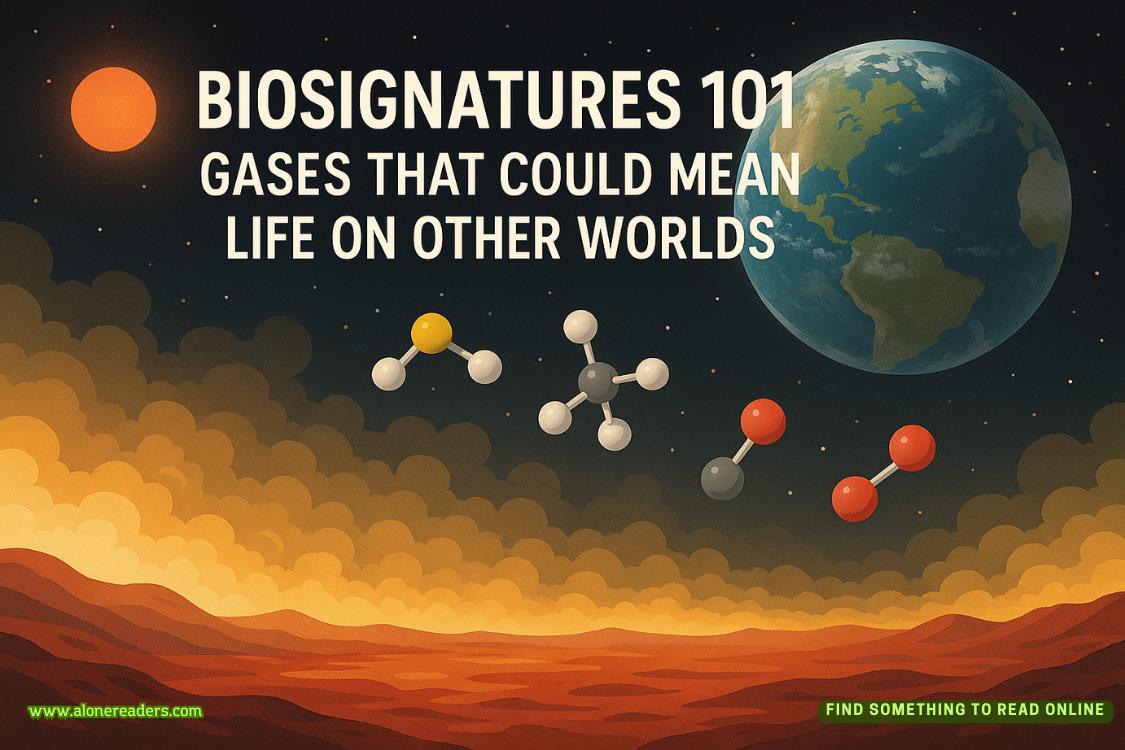
The search for extraterrestrial life has shifted dramatically in recent decades, moving from speculation to a systematic scientific discipline known as astrobiology. Central to this field is the study of biosignatures—measurable features that may indicate the presence of life. Among these, gases in planetary atmospheres are particularly important because they can be observed remotely using telescopes. Detecting such gases does not automatically prove life exists, but the right combinations, sustained over time, can provide strong circumstantial evidence. To truly appreciate this search, it is vital to understand which gases matter, why they are significant, and how scientists distinguish between biological and non-biological origins.
Atmospheric balance vs. disequilibrium
In planetary science, a sterile planet’s atmosphere tends to settle into chemical equilibrium, where reactions stabilize over long timescales. Life, however, drives disequilibrium. On Earth, the coexistence of large amounts of oxygen and methane is highly improbable without continuous biological input. If both gases are detected together in an exoplanetary atmosphere, it suggests an active process—possibly life—maintaining that imbalance.
Why equilibrium matters
Telescopes measure absorption spectra, revealing atmospheric composition. If we observe gases that shouldn’t stably coexist, scientists consider that imbalance a biosignature. The trick is proving that geology or photochemistry alone cannot account for the anomaly.
Why oxygen is critical
On Earth, molecular oxygen is primarily produced by photosynthetic organisms splitting water molecules with sunlight. Without biology, oxygen rapidly reacts with rocks, volcanic gases, and reduced elements, disappearing over geological timescales. Thus, a high oxygen level in an atmosphere could be a strong biosignature.
Ozone as a proxy
Detecting oxygen directly across light-years is challenging. Instead, astronomers look for ozone, a secondary product of oxygen in the upper atmosphere. Ozone has distinct ultraviolet absorption bands, making it easier to detect in planetary spectra. Importantly, ozone both shields planets from harmful radiation and indirectly indicates abundant oxygen.
False positives
Some processes, like water photolysis followed by hydrogen escape, can produce abiotic oxygen. This is especially true on planets around red dwarf stars. Scientists must therefore look for additional supporting gases before declaring oxygen a true biosignature.
Methane’s biological sources
On Earth, methane arises from microbial methanogenesis, a metabolic pathway in oxygen-free environments. Wetlands, ruminant animals, and certain archaea are prime contributors. Importantly, methane breaks down quickly under ultraviolet radiation, so persistent high levels imply continuous replenishment.
Methane-oxygen disequilibrium
Methane becomes especially powerful as a biosignature when paired with oxygen. Both gases destroy each other chemically, so their simultaneous detection at significant concentrations strongly suggests an active source—likely biology.
Abiotic methane pitfalls
Volcanic activity, hydrothermal vents, and serpentinization (water-rock reactions) can also produce methane. Therefore, scientists analyze isotopic ratios and coexisting gases to separate biological methane from abiotic sources.
The overlooked greenhouse gas
While less famous than oxygen or methane, nitrous oxide is a potent biosignature candidate. On Earth, it originates primarily from microbial processes in soils and oceans, specifically denitrification.
Stability and detectability
N₂O is relatively stable, but in an oxygen-rich atmosphere it would not accumulate unless continuously supplied. Detecting it remotely is more challenging than methane or oxygen, but future telescopes may be sensitive enough.
False positive rarity
Unlike methane or oxygen, abiotic production of nitrous oxide is limited, making it a more reliable biosignature. Its detection, especially with oxygen, could serve as a strong indicator of biological activity.
The Venus controversy
Phosphine became headline news when researchers reported possible detections in Venus’s atmosphere. On Earth, phosphine is produced by anaerobic microbial life and in industrial processes, but not by known abiotic pathways in oxidizing environments.
Why phosphine matters
Phosphine is unstable in oxygen-rich atmospheres, requiring constant replenishment. Its presence in a terrestrial-type atmosphere could indicate biology. However, on gas giants, phosphine is expected from high-pressure chemistry deep in their atmospheres, so context is essential.
Lessons from Venus
The debate around Venus shows the importance of careful analysis. Initial phosphine claims were challenged by other scientists, who suggested data processing errors or alternative explanations. This case illustrates how challenging biosignature detection can be.
Dimethyl sulfide (DMS)
On Earth, marine phytoplankton emit dimethyl sulfide, a gas that plays a role in cloud formation and climate regulation. Its presence in an exoplanet atmosphere would be highly suggestive of biological activity, though detection at interstellar distances would be difficult.
Hydrogen sulfide (H₂S)
Produced both biologically and volcanically, hydrogen sulfide illustrates the ambiguity of sulfur compounds. Alone, it cannot be considered a biosignature, but in the right atmospheric context—particularly alongside other organic gases—it could support a biological interpretation.
Why single-gas detection isn’t enough
Every potential biosignature gas has non-biological production pathways. For this reason, astrobiologists emphasize the importance of gas combinations and their relative abundances. It is the chemical interplay, rather than a single molecule, that strengthens the case for life.
Examples of promising combinations
Such combinations are far harder to explain through abiotic chemistry alone, providing more reliable signals.
Surface biosignatures
Reflectance spectra can reveal pigments like chlorophyll, producing a “red edge” effect. When combined with atmospheric biosignatures, this strengthens the case for life.
Temporal variation
Life-driven gases may fluctuate seasonally. Detecting periodic changes in methane or oxygen levels could indicate biological cycles rather than random abiotic events.
Planetary context
Every biosignature must be interpreted relative to a planet’s geology, star type, and climate. For example, a planet around an M-dwarf might accumulate abiotic oxygen due to strong stellar activity, so methane or nitrous oxide would be necessary to strengthen the life hypothesis.
Upcoming telescopes
The James Webb Space Telescope (JWST) has already begun characterizing exoplanet atmospheres, but the next generation—such as LUVOIR and HabEx—will be far more powerful. They aim to directly image Earth-like planets and measure biosignature gases with higher precision.
Data challenges
Even with advanced telescopes, data will remain noisy, requiring careful statistical modeling. False positives and ambiguous signals will dominate early results, but refined models and larger sample sizes will eventually allow robust conclusions.
The search for extraterrestrial life is ultimately a search for patterns of imbalance, chemistry that should not persist without active renewal. Gases such as oxygen, methane, nitrous oxide, phosphine, and sulfur compounds all represent potential biosignatures, but context and combinations matter more than isolated detections. The challenge lies in separating biological signals from geological or photochemical processes. As telescope technology advances, scientists will gradually refine their ability to distinguish these subtle fingerprints of life. While a single gas may never be conclusive, the right mix, interpreted in planetary context, could one day deliver humanity’s first evidence that we are not alone.



 Château de Vincennes: France’s Forgotten Royal Fortress and Medieval Stronghold
 Château de Carcassonne: Europe’s Greatest Medieval Citadel and Fortress
 Château de Chenonceau: The Castle Built by Remarkable Women
 Château de Chambord: France’s Magnificent Renaissance Castle and Architectural Wonder
 Tehri Dam: India's Tallest Dam and the Debate Behind It
 Bhakra Nangal Dam: India's Temple of Modern Development










