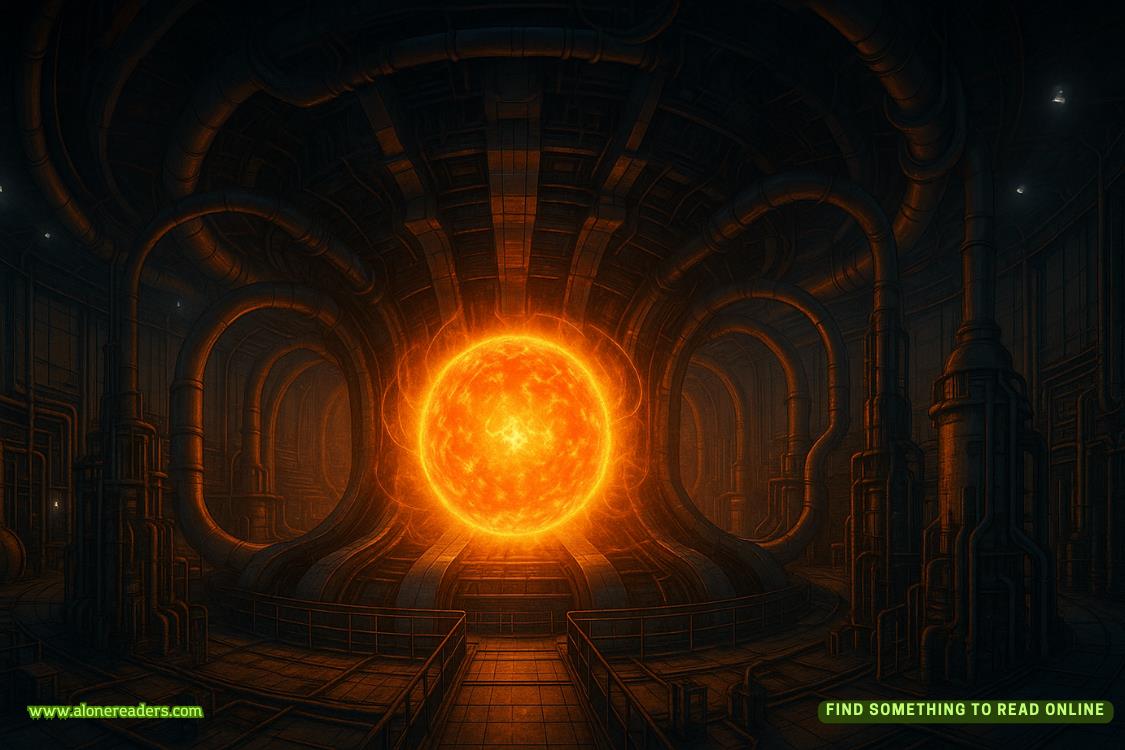
For nearly a century, scientists have dreamed of harnessing the same reaction that fuels the Sun—nuclear fusion—as an inexhaustible, clean energy source. Unlike fission, which splits atoms, fusion merges them, releasing vast amounts of energy without long-lived radioactive waste. The International Thermonuclear Experimental Reactor, better known as ITER, is the most ambitious attempt in human history to make this dream a reality. Situated in southern France, ITER is not just a scientific experiment but a multinational engineering marvel, often described as the most complex machine ever built.
A collaboration across continents
ITER involves 35 nations, including the European Union, the United States, China, Russia, India, Japan, and South Korea. Each partner contributes specialized components, from superconducting magnets to cryogenic systems, shipped to France and assembled on site like a colossal scientific puzzle.
Why ITER matters
The ultimate goal is to demonstrate that a fusion device can produce more energy than it consumes. ITER is designed to generate 500 megawatts of thermal power from just 50 megawatts of input—an energy gain factor of 10. While ITER itself will not produce electricity for the grid, its success would pave the way for commercial fusion power plants in the second half of this century.
The tokamak design
At the center of ITER lies the tokamak, a doughnut-shaped vacuum chamber designed to confine plasma—the superheated soup of hydrogen isotopes—using powerful magnetic fields. Plasma temperatures must reach over 150 million degrees Celsius, ten times hotter than the Sun’s core, to overcome the natural repulsion between positively charged nuclei.
Magnetic confinement
ITER’s magnets, including superconducting toroidal and poloidal field coils, will generate magnetic fields 200,000 times stronger than Earth’s. These fields twist and stabilize the plasma, keeping it suspended away from the reactor walls. Without this confinement, no material on Earth could withstand the plasma’s intensity.
Abundant deuterium
One part of the fuel mix, deuterium, is easily extracted from seawater. Just a liter of water contains enough deuterium to generate energy equivalent to the burning of 300 liters of oil.
Scarce tritium
The other component, tritium, is much rarer. ITER plans to breed tritium inside the reactor using lithium-containing blankets. When high-energy neutrons from the fusion reaction strike lithium, tritium is produced. This closed fuel cycle is a critical innovation for future reactors, ensuring sustainability.
Extreme temperatures
ITER must maintain conditions hotter than the Sun’s core while simultaneously cooling its superconducting magnets to near absolute zero (-269°C). This juxtaposition of extremes within a single machine pushes the limits of modern engineering.
Materials under neutron bombardment
Fusion reactions release neutrons carrying immense energy. Over years of operation, these neutrons will damage reactor walls and structural materials. ITER serves as a testbed to study these effects, guiding the development of materials for future reactors.
Precision assembly
The tokamak is composed of millions of parts, some weighing hundreds of tons, with tolerances measured in millimeters. Components are shipped from all over the globe, requiring extraordinary logistical coordination. The cryostat, for example, is the largest stainless steel vacuum chamber ever built, standing 30 meters tall.
Scientific break-even vs engineering break-even
Laboratory experiments have already achieved fusion for brief instants, but never at energy gain. ITER aims for “Q ≥ 10,” meaning ten times more energy out than in. While this is not yet true “engineering break-even” (producing net electricity), it would be a landmark demonstration of fusion’s viability.
Pulse length
ITER’s design allows plasma pulses lasting up to 400 seconds. Sustained operation at this scale will provide critical data for designing reactors that can run continuously, feeding electricity into the grid.
An unprecedented partnership
ITER is a political project as much as a scientific one. Sharing costs and expertise across rival nations demonstrates a rare spirit of global collaboration. Each member state contributes components, expertise, and funding. This arrangement, while politically sensitive, ensures broad ownership of the experiment’s eventual success.
Delays and criticisms
The project has faced criticism for delays, cost overruns, and management challenges. Initially expected to begin plasma operations in the early 2020s, ITER now targets its first plasma for the early 2030s. Critics argue that fusion’s promise is always “30 years away.” Supporters counter that the scale and complexity of ITER make delays inevitable, and that the knowledge gained will be invaluable for future generations.
DEMO reactors
If ITER proves successful, the next step will be DEMO—demonstration fusion power plants capable of supplying electricity to the grid. DEMO designs are already being studied by ITER member nations, with an eye toward operation in the 2050s.
Private-sector fusion race
While ITER is a publicly funded behemoth, private companies around the world are pursuing alternative fusion approaches, such as stellarators, inertial confinement, and compact tokamaks. The data and experience from ITER will inform and complement these ventures, shaping a diverse fusion landscape.
Clean energy potential
Fusion produces no greenhouse gases, no long-lived radioactive waste, and requires only small amounts of fuel. A single kilogram of fusion fuel could yield as much energy as 10 million kilograms of fossil fuel. If harnessed, it could provide abundant energy for centuries, eliminating dependence on coal, oil, and gas.
Scientific spin-offs
The technologies developed for ITER—from superconducting magnets to remote handling robotics and cryogenics—will have applications far beyond energy. They may influence fields from medicine (MRI technology) to aerospace engineering.
ITER embodies humanity’s audacity to replicate the stars’ power here on Earth. It is not simply a reactor but a global declaration that the pursuit of limitless clean energy is worth decades of effort, billions of dollars, and international cooperation. The challenges remain immense—technical, financial, and political—but the prize, if won, would transform civilization itself. Bottling a star is perhaps the most ambitious project of our time, and ITER stands as the beacon leading us closer to that dream.



 Château de Vincennes: France’s Forgotten Royal Fortress and Medieval Stronghold
 Château de Carcassonne: Europe’s Greatest Medieval Citadel and Fortress
 Château de Chenonceau: The Castle Built by Remarkable Women
 Château de Chambord: France’s Magnificent Renaissance Castle and Architectural Wonder
 Tehri Dam: India's Tallest Dam and the Debate Behind It
 Bhakra Nangal Dam: India's Temple of Modern Development