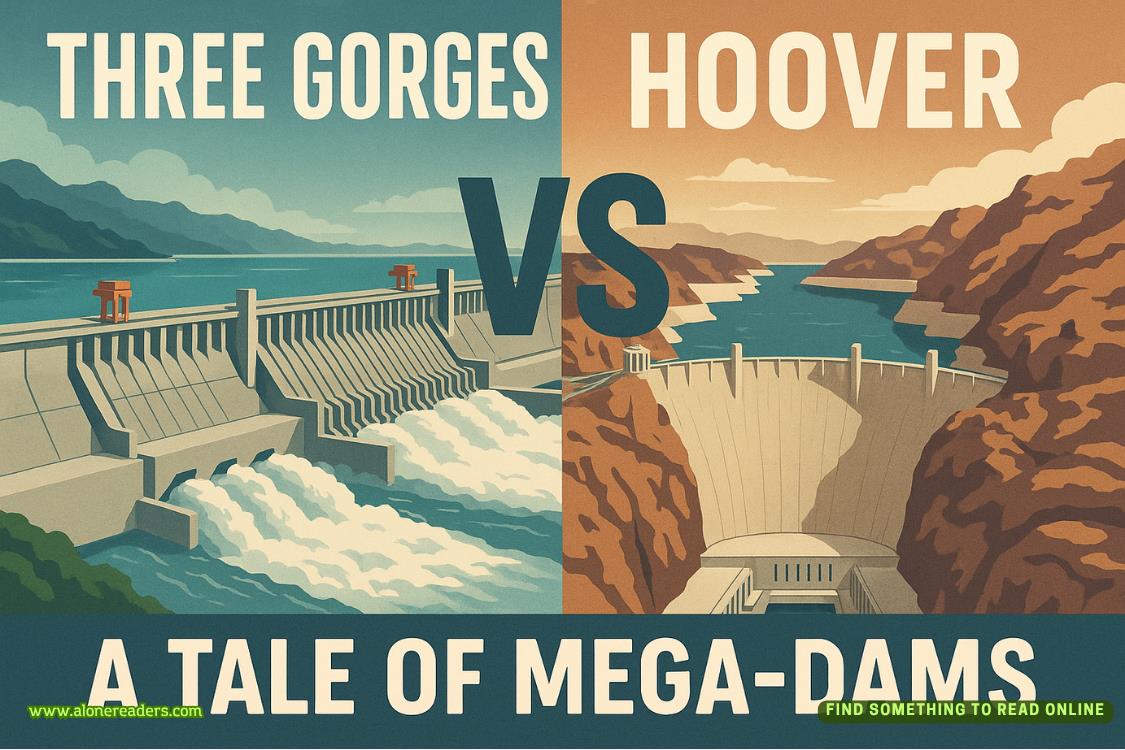
The Three Gorges Dam in China and the Hoover Dam in the United States are two of the most iconic hydroengineering projects in the modern world. Both dams symbolize national pride, demonstrate human ingenuity in taming mighty rivers, and serve as critical sources of hydroelectric power. Yet, while they share similarities in purpose, they differ vastly in scale, impact, and historical context. Comparing these two mega-dams not only highlights advancements in engineering but also reveals broader political, environmental, and social implications tied to such monumental projects.
The Hoover Dam, completed in 1936 during the Great Depression, stands as a cornerstone of American engineering and resilience. Built on the Colorado River at the border of Nevada and Arizona, it was conceived as a multipurpose project to provide electricity, regulate floods, and secure water supplies for agricultural and urban expansion in the arid American Southwest. At its completion, it was the tallest dam in the world, an art-deco masterpiece of concrete and steel. The dam created Lake Mead, still one of the largest artificial reservoirs in the United States, ensuring water for millions in states such as California, Nevada, and Arizona. The Hoover Dam became a symbol of hope and progress in an era when the nation sought to recover from economic hardship, representing the power of centralized federal planning and the promise of modern infrastructure.
In contrast, the Three Gorges Dam emerged from late 20th and early 21st-century China, reflecting the ambitions of a rapidly industrializing nation seeking both energy security and global recognition. Spanning the Yangtze River, the world’s third-longest river, the dam is the largest hydroelectric power station by installed capacity. Completed in 2012, it towers not just as a structure of concrete but as a symbol of China’s rise. Its generating capacity surpasses 22,500 megawatts, dwarfing the Hoover Dam’s 2,080 megawatts, underscoring the exponential growth in engineering scale over the decades. Where the Hoover Dam once awed the world as the pinnacle of construction, the Three Gorges Dam demonstrated China’s capability to undertake projects of unprecedented magnitude.
Yet size alone does not tell the whole story. The impacts of the two dams diverge significantly, particularly in terms of social and environmental consequences. Hoover Dam’s creation of Lake Mead required the relocation of relatively small numbers of people and inundated desert landscapes with limited ecological diversity compared to the vast river valley affected by the Three Gorges project. In China, the dam displaced more than 1.3 million people, submerged ancient towns, archaeological treasures, and fertile farmland, and altered ecosystems across hundreds of miles. Critics argue that while the energy benefits are immense, the social costs remain staggering, with displaced communities struggling to rebuild livelihoods and cultural heritage lost forever beneath the rising waters.
From an engineering perspective, both dams represent technical feats of their times. Hoover Dam’s construction involved innovations in mass concrete pouring, cooling techniques, and large-scale labor organization, setting standards for civil projects that followed. The Three Gorges Dam benefited from decades of advancements in materials, design, and hydrological modeling, allowing it to withstand the Yangtze’s immense seasonal flows and generate unprecedented amounts of electricity. Both projects demonstrate how engineering solutions evolve alongside national needs and technological capacity, reflecting the spirit of their respective eras.
Beyond engineering and energy, both dams play significant roles in flood control. Hoover Dam was designed to tame the Colorado, reducing seasonal flooding and enabling downstream agricultural stability. The Three Gorges Dam was explicitly justified as a tool to prevent catastrophic floods that historically devastated the Yangtze basin. While the dam has indeed mitigated flood risk in many instances, experts caution that climate change and sediment buildup may compromise long-term flood management effectiveness. Critics also point out that large dams, by altering natural river flow, can inadvertently increase flood risks downstream or upstream depending on management decisions.
Energy production, the most visible output of both projects, also contrasts in scale and impact. Hoover Dam supplies power to millions across the American Southwest, historically fueling the growth of cities like Las Vegas and Los Angeles. The Three Gorges Dam, with ten times the capacity, contributes significantly to China’s grid, powering megacities and industrial centers. For China, it was not only about supplying electricity but also about reducing reliance on coal and cutting carbon emissions. Supporters hail the dam as part of China’s shift toward renewable energy, though critics argue that such massive infrastructure projects bring ecological disruptions that offset some environmental benefits.
Politically, the Hoover Dam reinforced federal authority in American development, establishing the government’s central role in managing water resources. It became both a practical utility and a symbol of America’s ability to master nature. The Three Gorges Dam, similarly, is a projection of state power—embodying the Chinese government’s capacity to mobilize resources, technology, and labor for national goals. Both projects generated intense political debates during planning and construction, but each was ultimately justified by promises of progress, modernity, and national prestige.
In cultural terms, the Hoover Dam quickly became a celebrated landmark, drawing millions of tourists annually. Its art deco design, massive spillways, and dramatic desert setting turned it into an icon of American architecture and engineering. The Three Gorges Dam, while impressive in size, has drawn mixed cultural reactions. For some, it represents national pride and technological prowess; for others, it is a painful reminder of lost landscapes, cultural sites, and ancestral homes. The dam has literally reshaped China’s geography and figuratively reshaped the narrative of progress and sacrifice in modern Chinese history.
Looking ahead, both dams face challenges in sustainability. Hoover Dam, after decades of service, contends with declining water levels in Lake Mead due to prolonged drought and overuse of the Colorado River. Energy generation and water supply reliability are under stress, raising questions about the long-term viability of such mega-infrastructure in a changing climate. The Three Gorges Dam, though younger, also faces issues of sedimentation, environmental strain, and seismic risk in a geologically active region. These challenges highlight the inherent tension between human ambition to control nature and the unpredictable dynamics of natural systems.
Ultimately, comparing the Three Gorges and Hoover Dams reveals more than just differences in size and power output. It reveals contrasting historical contexts—America in the 1930s versus China in the 2000s—different societal costs, and divergent environmental consequences. Both projects stand as monuments to human engineering, national ambition, and the enduring belief in harnessing rivers for progress. Yet they also serve as cautionary tales, reminding us that while dams can provide immense benefits, they come with lasting costs that future generations must confront.
The tale of these two mega-dams is not simply about concrete and turbines but about nations grappling with the balance between progress and preservation. Hoover Dam captured the optimism of an America rising from depression, while the Three Gorges Dam encapsulates China’s determination to assert itself on the global stage. Together, they remind us that engineering marvels are never just technical achievements—they are reflections of political will, cultural identity, and humanity’s ongoing struggle to live alongside the natural forces that shape our world.



 Château de Vincennes: France’s Forgotten Royal Fortress and Medieval Stronghold
 Château de Carcassonne: Europe’s Greatest Medieval Citadel and Fortress
 Château de Chenonceau: The Castle Built by Remarkable Women
 Château de Chambord: France’s Magnificent Renaissance Castle and Architectural Wonder
 Tehri Dam: India's Tallest Dam and the Debate Behind It
 Bhakra Nangal Dam: India's Temple of Modern Development










