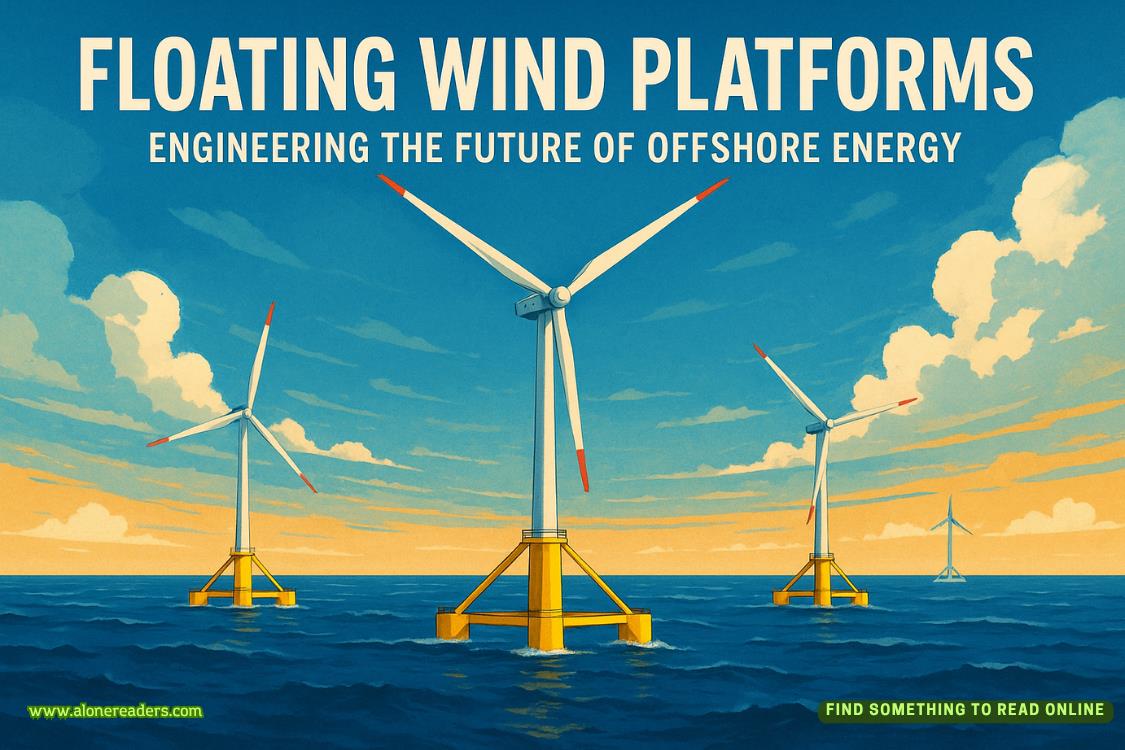
Floating wind platforms are rapidly emerging as one of the most revolutionary innovations in the renewable energy sector. As nations worldwide commit to reducing carbon emissions and accelerating the transition to clean power, the ocean has become an increasingly vital frontier for energy generation. Unlike conventional fixed-bottom offshore wind farms that are restricted to shallow waters, floating wind platforms allow turbines to be deployed in deep seas, where winds are stronger, steadier, and more abundant. This breakthrough is reshaping how we harness natural resources, bringing humanity closer to a future where fossil fuels are gradually phased out and renewable energy dominates the global grid.
The principle behind floating wind platforms is relatively straightforward but their engineering is complex. These platforms are designed to keep massive wind turbines stable on the ocean surface while resisting the relentless forces of waves, currents, and storms. Engineers have adapted ideas from the oil and gas industry, where floating rigs have operated for decades, but the challenges are unique in wind energy. While oil rigs extract resources from below, floating wind platforms must stand tall above the surface, ensuring the turbine remains upright and efficient even in extreme conditions. Achieving stability requires innovative anchoring systems, precise weight distribution, and advanced monitoring technologies that continuously adjust to environmental forces.
There are three primary designs that dominate the floating wind sector: spar-buoy, semi-submersible, and tension-leg platforms. Spar-buoy platforms rely on a long cylindrical structure that extends deep beneath the water, using ballast to stabilize the turbine above. Semi-submersible platforms spread weight across multiple columns that float partially submerged, offering flexibility and adaptability to different water depths. Tension-leg platforms, on the other hand, are tethered firmly to the seabed with taut mooring lines, minimizing vertical movement and enhancing stability. Each design has advantages depending on water depth, seabed conditions, and the scale of deployment, and engineers often select the model that best balances cost, reliability, and efficiency for a given site.
One of the greatest advantages of floating wind platforms is their ability to access deep-water sites that fixed-bottom turbines cannot. Fixed structures are usually feasible only up to depths of 60 meters, while floating platforms can be deployed in waters over 1,000 meters deep. This vastly expands the geographical range of offshore wind energy, especially for countries with narrow continental shelves, such as Japan, Norway, and parts of the United States. In these locations, floating wind offers the only viable path to harnessing offshore wind potential at scale. By moving further from shore, floating wind farms can also avoid many conflicts over coastal land use, fishing rights, and visual impact, making them more socially acceptable.
However, the benefits come with significant engineering and financial challenges. Building and installing floating wind platforms is far more expensive than constructing fixed-bottom turbines. Each platform must be fabricated with precision, towed out to sea, anchored, and connected to underwater power cables that transmit electricity back to the grid. Maintenance also poses logistical challenges, since turbines located far offshore require specialized vessels and weather windows for repair operations. Despite these hurdles, technological advances and economies of scale are gradually driving costs down. Industry analysts predict that by the 2030s, floating wind energy could achieve cost parity with conventional offshore wind, unlocking its potential as a mainstream energy source.
Another engineering challenge lies in grid integration. Offshore wind farms must connect to national grids through subsea transmission systems, which are complex and costly to build. Floating wind platforms often operate further from shore than traditional offshore farms, increasing cable lengths and transmission losses. Engineers are addressing this issue by developing high-voltage direct current (HVDC) systems that minimize losses over long distances, as well as modular offshore substations that can handle fluctuating output efficiently. The combination of floating platforms and advanced transmission technologies will be essential to fully realizing offshore wind’s potential.
Beyond engineering, floating wind platforms also play a crucial role in energy transition strategies. For many coastal nations, especially those with high energy demand but limited land space, offshore wind represents a key path to energy independence. Floating wind can deliver vast amounts of clean electricity without consuming valuable real estate, complementing other renewables like solar and onshore wind. Countries such as the United Kingdom, France, South Korea, and Norway are investing heavily in demonstration projects, aiming to scale up floating wind as part of their national decarbonization roadmaps. These early projects serve as testbeds for new technologies, regulatory frameworks, and financial models that will determine how quickly floating wind achieves commercial maturity.
Environmental considerations are also central to the development of floating wind platforms. While they avoid some of the seabed disruptions caused by fixed-bottom turbines, they still interact with marine ecosystems through anchoring systems and transmission cables. Careful site selection, environmental impact assessments, and adaptive management strategies are essential to minimize harm to marine biodiversity. On the positive side, floating wind platforms may even create artificial reef environments, attracting marine life around their structures. Striking a balance between renewable energy development and ocean health remains a top priority for engineers, policymakers, and environmentalists alike.
Floating wind also presents exciting synergies with other offshore industries. For instance, floating wind farms can provide power to offshore oil and gas platforms, reducing emissions from fossil fuel extraction. They can also support emerging industries such as green hydrogen production, where offshore wind energy powers electrolysis systems that produce hydrogen fuel directly at sea. This integration of floating wind with hydrogen and other clean technologies could accelerate the creation of a fully decarbonized energy ecosystem.
Looking ahead, the global floating wind industry is poised for exponential growth. Pilot projects in Scotland, Portugal, and Japan have already proven the feasibility of large-scale deployment, and gigawatt-scale projects are in planning stages across Europe, Asia, and North America. According to industry forecasts, global installed capacity of floating wind could exceed 20 gigawatts by 2035, with even larger potential beyond. As costs decline, supply chains expand, and expertise accumulates, floating wind is expected to evolve from an experimental technology into a cornerstone of the world’s clean energy future.
The future of floating wind platforms depends not only on engineering breakthroughs but also on strong policy support and financial investment. Governments must create stable regulatory environments, provide incentives for early projects, and ensure that offshore leasing processes are transparent and efficient. Private investors, meanwhile, must balance risk and reward as they back new projects in a rapidly evolving industry. The collaboration between governments, research institutions, and industry leaders will be critical in ensuring that floating wind delivers on its promise.
In conclusion, floating wind platforms embody the ingenuity and determination required to tackle one of humanity’s greatest challenges: the transition to sustainable energy. By enabling offshore wind development in deep waters, they unlock new frontiers of clean electricity generation that were previously inaccessible. While challenges remain in cost, engineering, and environmental stewardship, the momentum behind floating wind is undeniable. It represents not just a technological solution but a vision of a future where renewable energy is limitless, global, and resilient. As floating wind platforms rise on the oceans of the world, they symbolize humanity’s ability to engineer solutions that align with nature rather than deplete it—ushering in a new era of sustainable progress.



 Château de Vincennes: France’s Forgotten Royal Fortress and Medieval Stronghold
 Château de Carcassonne: Europe’s Greatest Medieval Citadel and Fortress
 Château de Chenonceau: The Castle Built by Remarkable Women
 Château de Chambord: France’s Magnificent Renaissance Castle and Architectural Wonder
 Tehri Dam: India's Tallest Dam and the Debate Behind It
 Bhakra Nangal Dam: India's Temple of Modern Development










