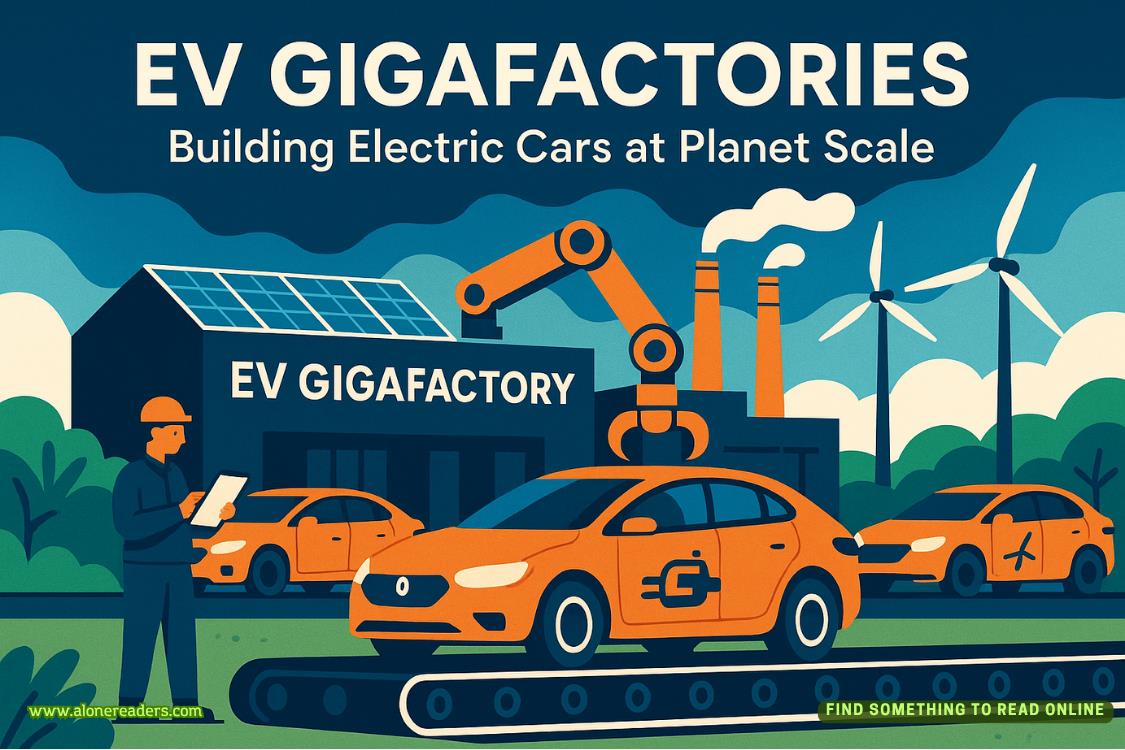
The electric vehicle revolution is no longer just a trend; it is an industrial transformation unfolding across continents. At the heart of this shift are gigafactories—massive industrial complexes designed to build electric cars and their batteries at a scale never before seen. The term “gigafactory,” popularized by Tesla, refers to manufacturing plants that produce not thousands, but millions of components annually. These factories are the backbone of a new global automotive economy, one that requires unprecedented coordination of raw materials, advanced robotics, artificial intelligence, and sustainable energy. Understanding how gigafactories function reveals not only the scale of electric vehicle production but also the immense complexity of building cars designed for a decarbonized future.
The first defining feature of a gigafactory is scale. Traditional car factories can span hundreds of thousands of square meters, but gigafactories often exceed one million square meters of operational space. This allows multiple stages of production—battery cell creation, module assembly, car body manufacturing, and final vehicle integration—to take place under one roof. By vertically integrating these processes, gigafactories reduce transportation costs, optimize production flows, and increase efficiency. This model is essential for producing millions of electric cars annually, meeting the surging demand as nations commit to phasing out internal combustion engines.
At the core of every electric car is its battery, and gigafactories have revolutionized how these power sources are built. Battery cell production is a highly technical process involving electrode coating, cell stacking or winding, electrolyte filling, and sealing—all conducted in climate-controlled cleanrooms. Gigafactories deploy robotic assembly lines capable of producing thousands of cells per hour with minimal human intervention. The cells are then tested for safety and quality before being assembled into modules and packs. Each pack undergoes thermal management integration to ensure performance and safety, as electric cars demand both high power density and long cycle life. The massive output from gigafactories has been essential in driving down battery costs, making EVs more affordable and competitive with gasoline vehicles.
Automation is the silent workforce of these factories. Unlike traditional automotive plants, where human labor still dominates assembly lines, gigafactories rely heavily on robots, AI-powered monitoring systems, and machine learning for predictive maintenance. Robots handle hazardous chemicals, move heavy modules, and conduct precision welding, reducing errors while ensuring worker safety. Meanwhile, advanced digital twins—virtual models of the production environment—allow engineers to simulate and optimize manufacturing processes in real time. This integration of automation and digital intelligence is critical in achieving the scale and consistency required for global electric vehicle demand.
The supply chain feeding gigafactories is as complex as the factories themselves. Lithium, cobalt, nickel, graphite, and manganese are sourced from across the world, often involving geopolitically sensitive regions. Companies are increasingly investing in securing long-term mining contracts, recycling technologies, and alternative chemistries to stabilize supply. For example, many gigafactories are moving toward lithium iron phosphate (LFP) batteries, which use fewer scarce materials and offer longer durability. This shift reduces reliance on conflict-prone cobalt mines while aligning with the industry’s sustainability goals. At the same time, governments are pushing for regional supply chains to reduce dependence on imports, sparking a race to establish domestic mining, refining, and battery production ecosystems.
Energy usage is another critical factor. Gigafactories consume enormous amounts of electricity, often rivaling small cities. To reduce carbon footprints, many are built with renewable energy integration at their core. Tesla’s Gigafactory Nevada, for instance, aims to run entirely on solar and wind power, while European gigafactories are increasingly connected to green energy grids. In addition, advanced energy management systems recycle waste heat, optimize lighting, and reduce emissions from industrial processes. This sustainable approach is not only environmentally essential but also economically strategic, as it shields production from volatile fossil fuel energy markets.
The assembly of the electric car itself follows once the battery packs are completed. Gigafactories integrate traditional automotive body production—stamping steel or aluminum panels, robotic welding, and painting—with EV-specific adaptations such as electric drive unit assembly and software integration. Electric cars are less mechanically complex than traditional vehicles, with fewer moving parts, but they demand sophisticated electronics. As a result, a significant portion of production focuses on integrating sensors, onboard computers, autonomous driving hardware, and advanced infotainment systems. Gigafactories are therefore as much about building cars as they are about building high-performance computers on wheels.
Global competition in gigafactory construction is intensifying. China currently leads the world in both the number of gigafactories and total battery output, supplying not only domestic automakers but also international brands. Europe has invested billions into its own projects, with factories in Germany, Sweden, and Hungary designed to reduce dependence on Asian supply chains. In the United States, Tesla remains the leader, but companies like GM, Ford, and Hyundai are rapidly constructing new facilities to meet demand. India, Canada, and Southeast Asia are also emerging players, recognizing the strategic and economic importance of gigafactory infrastructure in the coming decades. This race to build gigafactories is reshaping global trade, industrial strategy, and energy policy.
The workforce behind gigafactories is equally crucial. While automation handles the bulk of physical labor, human expertise is indispensable in engineering, data analysis, supply chain logistics, and quality assurance. Gigafactories employ thousands of people in roles ranging from material scientists to AI specialists. Training and reskilling programs are essential, as workers transition from traditional automotive jobs to high-tech EV manufacturing roles. This creates both opportunities and challenges, particularly in regions heavily reliant on fossil-fuel vehicle production. Nations investing in gigafactories must also invest in education and workforce transformation to ensure a smooth industrial shift.
Perhaps the most remarkable aspect of gigafactories is how they compress the future into the present. The vision of a decarbonized automotive sector depends on scaling production to tens of millions of vehicles annually by the 2030s. Without gigafactories, this would remain an aspiration rather than a reality. The rapid construction of these facilities—some completed in less than two years—demonstrates the urgency and ambition of the global electric vehicle transition. They stand as monuments not only to engineering but also to collective determination in addressing climate change through industrial innovation.
Yet challenges remain. Recycling end-of-life batteries at scale is still an emerging technology, and ensuring ethical sourcing of raw materials is a constant concern. Furthermore, the high upfront investment of building gigafactories—often tens of billions of dollars—requires strong government incentives, corporate partnerships, and long-term market stability. If demand slows, some gigafactories risk becoming stranded assets. The industry must therefore balance ambition with adaptability, ensuring that gigafactories evolve with technological advances in battery chemistry, software integration, and mobility models such as shared and autonomous transport.
In conclusion, EV gigafactories represent the industrial engine of the 21st century’s mobility revolution. They combine unprecedented scale, automation, and global coordination to make electric cars accessible to millions worldwide. From the mining of raw materials to the assembly of advanced vehicles, gigafactories illustrate how humanity can harness technology to tackle climate challenges while reshaping industries. As more nations invest in these facilities, the blueprint for future manufacturing is being written in real time. Planet-scale car production, once unimaginable, has now become the foundation of sustainable transportation.



 Château de Vincennes: France’s Forgotten Royal Fortress and Medieval Stronghold
 Château de Carcassonne: Europe’s Greatest Medieval Citadel and Fortress
 Château de Chenonceau: The Castle Built by Remarkable Women
 Château de Chambord: France’s Magnificent Renaissance Castle and Architectural Wonder
 Tehri Dam: India's Tallest Dam and the Debate Behind It
 Bhakra Nangal Dam: India's Temple of Modern Development










