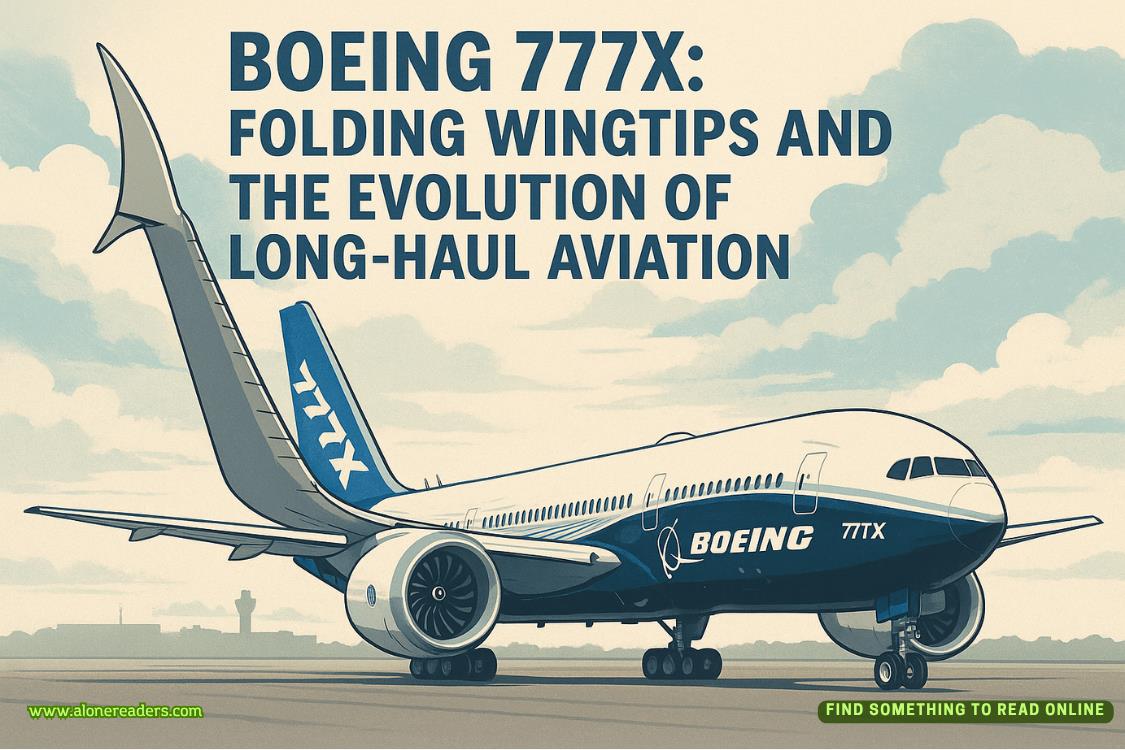
The Boeing 777X represents a transformative step in the evolution of commercial aviation, merging proven design heritage with revolutionary technology. As the largest and most advanced twin-engine jet ever built, the 777X aims to redefine long-haul travel through its remarkable fuel efficiency, passenger comfort, and cutting-edge aerodynamics. Yet among all its innovations, the feature that captures the world’s attention most vividly is its folding wingtips—a first in commercial aviation. This technology not only enables the aircraft to fit within standard airport gates but also symbolizes Boeing’s broader vision of blending size, power, and adaptability in the age of global connectivity.
When Boeing introduced the 777 family in the 1990s, it set a new benchmark for intercontinental travel. The aircraft quickly became the flagship of many airlines due to its range, reliability, and lower operating costs compared to four-engine giants like the Boeing 747 or Airbus A340. However, as the aviation industry moved toward more sustainable operations and fuel efficiency, Boeing recognized that even the successful 777 could be reimagined for the future. Thus, the 777X program was conceived, combining the wide-body comfort of the 777 with the advanced materials, aerodynamics, and engines inspired by the 787 Dreamliner.
At the core of the 777X’s design is its extraordinary new wing. Spanning an unprecedented 235 feet (71.8 meters) from tip to tip when extended, the composite wing offers superior lift and aerodynamic efficiency. This is the largest wing ever built for a twin-engine airliner, and its design directly contributes to significant fuel savings. But such a massive wingspan presents a logistical challenge—many airport gates and taxiways simply cannot accommodate it. Boeing’s ingenious solution was to introduce folding wingtips, a mechanism that allows the last 11 feet of each wing to fold upward after landing, reducing the wingspan to 212 feet (64.8 meters)—similar to the existing 777. This enables the 777X to use the same airport infrastructure without requiring any major modifications.
The folding wingtip concept, while groundbreaking in commercial aviation, has long existed in military aircraft such as carrier-based fighters. However, Boeing had to overcome significant regulatory and engineering challenges to adapt this mechanism for civil use. The Federal Aviation Administration (FAA) imposed strict safety criteria to ensure that the wingtips cannot fold mid-flight and that multiple redundancies exist in the locking mechanism. The result is a system powered by hydraulics and controlled by multiple fail-safe circuits that lock the wingtips securely in place during flight. Sensors constantly monitor the status of the mechanism, ensuring that any anomalies are detected immediately before takeoff or during taxiing. Boeing even designed visual indicators for pilots and ground crews to confirm that the wingtips are correctly locked or folded.
The impact of the folding wingtips goes far beyond convenience. By enabling a longer, high-aspect-ratio wing, Boeing dramatically improved the aircraft’s lift-to-drag ratio, which enhances range and reduces fuel consumption. The composite structure of the wings also allows for greater flexibility and strength while being lighter than traditional aluminum. Together, these innovations result in a roughly 10–12% reduction in fuel burn compared to previous 777 models, a crucial improvement in an industry under increasing environmental pressure. Airlines can now operate longer routes with reduced emissions, making the 777X not only a technological marvel but also a strategic response to sustainability demands.
Complementing the new wings are the GE9X engines, the most powerful and efficient turbofans ever built for commercial service. Developed by General Electric specifically for the 777X, each GE9X engine produces up to 134,000 pounds of thrust, surpassing all existing commercial engines. Yet despite their immense power, these engines are designed to be quieter and cleaner than their predecessors. They incorporate advanced composite fan blades, a higher bypass ratio, and lean-burn combustion technology that minimizes nitrogen oxide emissions. The combination of these features ensures that the 777X meets or exceeds all current noise and environmental standards while delivering unmatched performance on ultra-long-haul routes.
Inside the cabin, the 777X continues Boeing’s tradition of passenger-focused design but raises it to a new level. Borrowing from the 787 Dreamliner, the aircraft features larger windows, higher humidity levels, and improved cabin pressurization, all contributing to a more comfortable flight experience, especially on journeys lasting over 15 hours. The windows are 16% larger than those on the current 777, positioned higher so every passenger enjoys a better view. The wider cabin—made possible by the new composite fuselage sections—gives airlines flexibility to design premium seating layouts or enhance economy-class comfort. Ambient LED lighting, quieter interiors, and advanced air filtration systems ensure a calmer and more relaxing environment throughout the flight.
Operationally, the Boeing 777X comes in two main variants: the 777-8 and the 777-9. The 777-8 offers a longer range of around 8,700 nautical miles, making it ideal for ultra-long-haul routes such as Dubai–Los Angeles or Sydney–London, while the 777-9 prioritizes capacity, capable of carrying up to 426 passengers in a typical two-class configuration over 7,285 nautical miles. Both models leverage Boeing’s advanced digital flight deck, which integrates electronic checklists, touchscreen displays, and enhanced navigation tools. These features not only improve pilot situational awareness but also reduce workload and maintenance costs over time.
The 777X program faced delays and challenges, from supply chain issues to the global travel downturn during the COVID-19 pandemic. However, flight testing has demonstrated its exceptional performance and reliability. Boeing conducted extensive structural, systems, and high-altitude testing to validate the folding wingtip mechanisms and engine efficiency under extreme conditions. The aircraft’s maiden flight in January 2020 marked a major milestone, and certification efforts continue as Boeing works closely with regulators worldwide. Once in full operation, the 777X is expected to become the backbone of many flagship airlines’ long-haul fleets, including Emirates, Lufthansa, Qatar Airways, and Singapore Airlines—all of which have placed substantial orders.
From an industry perspective, the Boeing 777X’s significance lies not only in its technological leaps but also in what it represents for the future of aviation. With global passenger traffic projected to double over the next two decades, airlines are seeking aircraft that balance range, capacity, and efficiency. The 777X perfectly aligns with this vision—its twin-engine design reduces operating costs compared to four-engine alternatives, while its extended range and comfort enable airlines to connect distant city pairs nonstop. The folding wingtip innovation, in particular, embodies a pragmatic balance between ambition and practicality: pushing aerodynamic limits without demanding sweeping airport redesigns.
In the broader narrative of aerospace evolution, the 777X marks a transitional era. As aviation moves toward greater sustainability, manufacturers like Boeing are exploring hybrid-electric propulsion, sustainable aviation fuels, and even hydrogen power. Yet, in the medium term, optimizing existing jet technologies remains the most viable path. The 777X represents the pinnacle of that optimization—extracting every ounce of performance from jet fuel through advanced aerodynamics, composite materials, and engine innovation. It is a bridge between today’s high-performance airliners and tomorrow’s carbon-neutral skies.
For passengers, the 777X promises to make the world smaller in comfort and style. For airlines, it offers an economical, environmentally responsible workhorse capable of spanning continents with fewer stopovers. For airports, its folding wings redefine what’s possible within existing boundaries. The aircraft stands as a testament to Boeing’s engineering ingenuity—a response to evolving market needs, environmental concerns, and the unending human desire to travel farther, faster, and more efficiently.
In the coming years, as the Boeing 777X enters regular service, its influence will ripple across the industry. Competitors will adopt similar aerodynamic strategies, regulators will refine standards around movable aerodynamic surfaces, and travelers will experience firsthand the quiet power of innovation unfolding in the skies. Whether viewed as a symbol of progress or as a gateway to the next generation of sustainable flight, the 777X captures the essence of aviation’s eternal pursuit: the perfect balance between technology, efficiency, and human aspiration.



 Château de Vincennes: France’s Forgotten Royal Fortress and Medieval Stronghold
 Château de Carcassonne: Europe’s Greatest Medieval Citadel and Fortress
 Château de Chenonceau: The Castle Built by Remarkable Women
 Château de Chambord: France’s Magnificent Renaissance Castle and Architectural Wonder
 Tehri Dam: India's Tallest Dam and the Debate Behind It
 Bhakra Nangal Dam: India's Temple of Modern Development