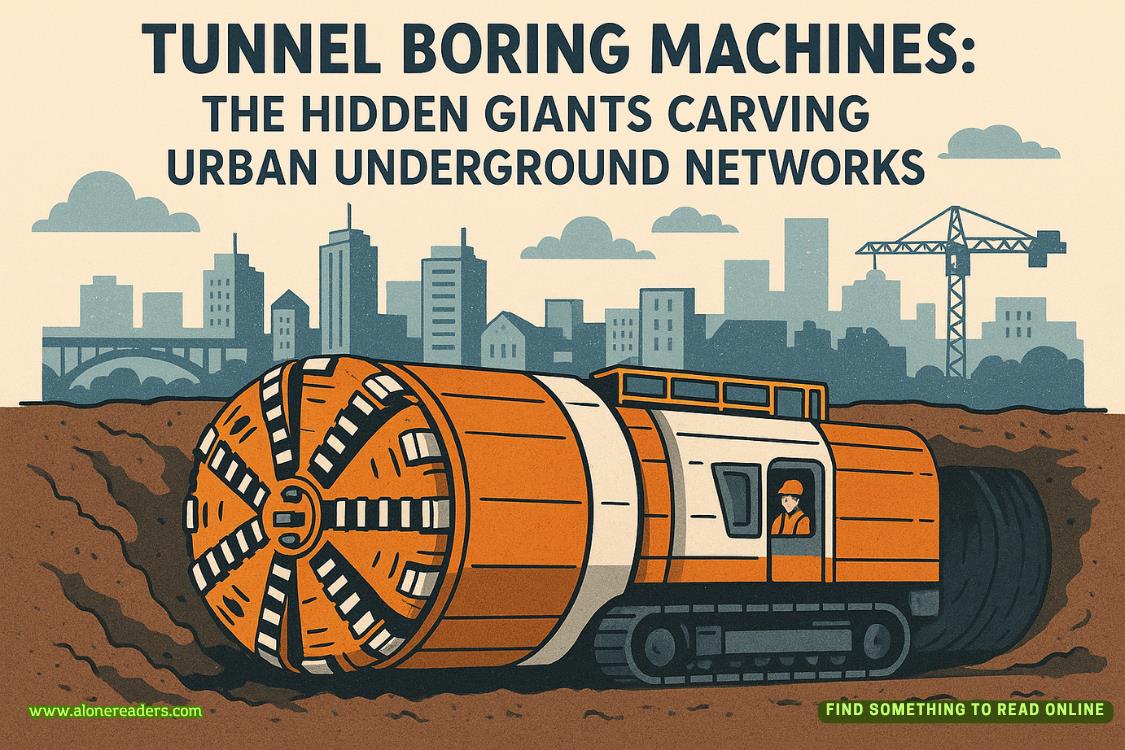
Tunnel boring machines, commonly known as TBMs, are among the most impressive and essential machines in modern urban development. As cities continue to expand upward and outward, the need for efficient underground infrastructure has become increasingly critical. TBMs enable the construction of subway networks, utility conduits, sewage tunnels, transport routes, and underground highways without disrupting the life above ground. Their ability to precisely excavate rock and soil while installing structural support has made them indispensable, especially as more megacities emerge worldwide. The concept of underground construction is not new, but the sophistication of modern TBMs has ushered in a new era of engineering capabilities. Their technological advancements have reduced construction time, enhanced safety, and allowed planners to adopt more ambitious designs. Without them, many of the world’s most iconic metro systems would not exist in their current form.
TBMs are essentially massive, cylindrical mechanical worms equipped with rotating cutting heads. As they advance, they grind, crush, and break down geological materials, transporting debris through conveyor systems and simultaneously constructing tunnel walls using prefabricated lining segments. The machine’s diameter can range from a few meters—used for utility tunnels—to giant sizes capable of carving multi-lane underground roads. The front of the TBM houses the rotating cutterhead, which is fitted with hard metal discs or cutters designed to tackle rock strata of varying hardness. Behind the cutterhead is a system of hydraulic jacks that brace against the tunnel lining and push the machine forward. This arrangement allows for continuous forward motion, even when facing high geological resistance. Modern TBMs incorporate extensive monitoring systems and onboard operators, enabling adjustments to cutting pressure, rotation speed, and excavation rate depending on soil composition and stability.
One of the most impressive characteristics of TBMs is their ability to minimize surface disruption. Traditional tunneling methods often require extensive excavation, temporary road closures, and significant manpower. TBMs, however, bore deep beneath the surface, reducing noise, dust, and hindered traffic above. Cities like London, Tokyo, and Shanghai rely heavily on TBMs to expand their underground networks without disturbing millions of residents. This advantage allows urban planners to propose transportation routes beneath dense urban blocks, historic buildings, and sensitive ecological areas. Their precision is supported by laser guidance systems, geotechnical sensors, and real-time monitoring dashboards within control cabins. TBM operators can adjust direction by millimeters, maintaining the tunnel’s alignment even over long distances.
Different geological conditions require different types of TBMs. Earth Pressure Balance (EPB) TBMs are used in soft soils and urban environments where ground stability is paramount. They maintain pressure within the machine to prevent soil from collapsing into the tunnel. Slurry TBMs are used when groundwater pressure is high; they mix soil with slurry to maintain stability and later separate excavated material at surface treatment plants. Hard rock TBMs are employed in extremely tough geological conditions, where cutter discs must withstand constant abrasion. Choosing the correct type of TBM for a project is a sophisticated engineering decision informed by soil surveys, core sampling, hydrological modeling, and computer simulations. Each type has unique characteristics, but they share the unified purpose of ensuring controlled excavation and stability.
One challenge inherent to underground construction is ground settlement, which can destabilize buildings and utilities above. TBMs mitigate this by carefully controlling the pressure at the cutterhead. Continuous soil support and immediate tunnel lining installation prevent voids, reducing the risk of collapse. This feature is particularly important in cities with historic architecture, where even minor settlement can damage heritage structures. TBMs can also safely pass beneath rivers and harbors, maintaining structural integrity through high water pressure. For example, the construction of underwater tunnels connecting major financial districts or airport sections would be nearly impossible without advanced TBM technology.
Safety is another area where TBMs have advanced significantly. Modern machines contain sealed cabins with ventilated air, emergency exits, and advanced fire suppression systems. Prior to the advent of TBMs, conventional tunneling exposed workers to hazardous conditions including noxious gases, unpredictable collapses, and flooding. Today, workers operate many systems remotely, reducing exposure to risk. Sensors embedded in cutterheads can detect gas pockets before they rupture, and real-time feedback allows engineers to anticipate changes in ground conditions. Maintenance robots, sometimes integrated within the machine, can inspect cutterheads without requiring humans to climb into hazardous zones.
A TBM’s journey is highly planned and coordinated. Before excavation begins, engineers map the tunnel’s route using geological surveys and 3D modeling. This phase assesses fault lines, soil moisture, water tables, and rock density. Engineers also identify potential obstacles such as existing underground utilities, foundations, and transportation systems. Once the route is planned, launch shafts are excavated for TBM deployment. As the machine progresses, the tunnel lining segments are transported deep into the tunnel and installed using hydraulic arms. These segments form a complete ring, providing structural support. When the project reaches its destination, a retrieval shaft is constructed, and the TBM is either dismantled or redirected to begin another section of tunnel.
Urban planners often depend on TBMs to support megaprojects designed to reduce surface congestion. For example, the expansion of metro lines alleviates the reliance on cars, thereby reducing traffic and emissions. Underground utility tunnels consolidate power lines, fiber optics, and water pipelines, making maintenance simpler and reducing the risk of accidental damage. In addition, TBMs are increasingly used to develop underground stormwater systems, mitigating flood risks in low-lying cities affected by climate change. These applications highlight TBMs’ growing role in urban resilience planning.
Cost considerations are significant, as TBMs are expensive. A single machine can cost tens of millions of dollars, and project budgets can balloon based on geological surprises. However, their efficiency often offsets costs by reducing surface disruption, property acquisition, and long-term repair expenses. Large TBMs are sometimes reused for multiple projects; components such as cutterheads may be refurbished, and structural elements recycled. Manufacturers like Herrenknecht, Robbins, and China Railway Engineering Equipment Group contribute to a competitive market, continuously introducing innovations that lower energy consumption, improve cutterhead durability, and reduce maintenance downtime.
The environmental footprint of TBMs is a topic of expanding research. While cutting through rock consumes immense power, the reduced need for surface demolition reduces carbon emissions overall. Additionally, by encouraging underground transit systems, TBMs indirectly support sustainable mobility. Some TBMs are now being developed to operate with reduced carbon materials, and ongoing innovation focuses on water recycling in slurry systems. Excavated material, known as muck, is often processed to be reused in construction aggregates, thereby cutting waste.
Looking toward the future, TBMs are becoming increasingly automated. AI-assisted navigation systems allow for predictive adjustments to cutter pressure and alignment. Automated segment installers improve precision and reduce manual labor. Robotics integrated into cutterhead assemblies provide continuous diagnostics, extending tool life. As urbanization accelerates, future megacities may incorporate multi-layered underground infrastructure, including subterranean commercial districts and alternative transportation corridors. TBMs will play a central role in building these subterranean environments safely and efficiently.
The importance of TBMs in modern civil engineering extends far beyond simple tunneling. They symbolize human capacity to shape terrain invisibly, utilizing engineering intelligence to improve life without altering city skylines. By providing transportation relief, protecting utilities, and preparing cities for climate challenges, TBMs contribute to sustainable urban evolution. Their continued development promises greater efficiency, safety, and environmental responsibility. As more cities embrace underground expansion as a solution to surface limitations, TBMs will remain at the forefront of engineering innovation, quietly carving the arteries that keep modern societies moving beneath the world’s busiest streets.



 Château de Vincennes: France’s Forgotten Royal Fortress and Medieval Stronghold
 Château de Carcassonne: Europe’s Greatest Medieval Citadel and Fortress
 Château de Chenonceau: The Castle Built by Remarkable Women
 Château de Chambord: France’s Magnificent Renaissance Castle and Architectural Wonder
 Tehri Dam: India's Tallest Dam and the Debate Behind It
 Bhakra Nangal Dam: India's Temple of Modern Development










