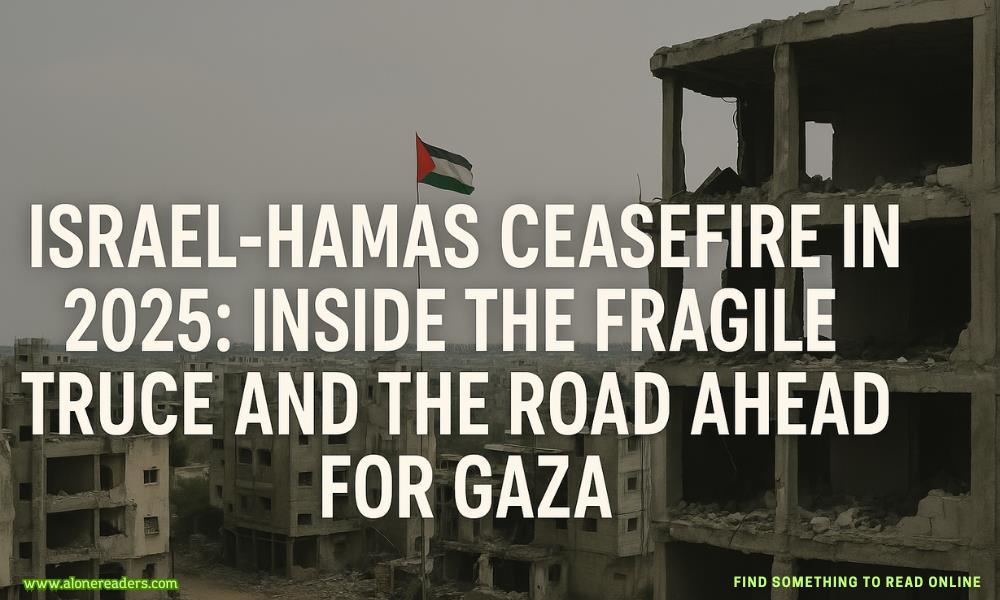
The latest ceasefire between Israel and Hamas, brokered after weeks of deadly escalation in 2025, is being hailed by many as a welcome respite from violence. However, beneath the surface lies a tense, fragile arrangement shaped by deep-seated political dysfunction, humanitarian catastrophe, and mutual distrust. Far from resolving the conflict, the current truce merely presses pause on a war that has become a chronic feature of life in the Gaza Strip.
This article dissects the core components of the ceasefire, the motivations behind both sides agreeing to it, the underlying structural instabilities that threaten to unravel it, and what lies ahead for the civilians trapped in the middle.
Trigger Incident and Rapid Escalation
The 2025 round of hostilities began with the targeted killing of a senior Hamas commander in southern Gaza by the Israeli Defense Forces (IDF), allegedly in response to the firing of a new generation of long-range rockets that had reached Tel Aviv suburbs days earlier. Hamas retaliated almost immediately, unleashing more than 500 rockets within the first 24 hours, including advanced projectiles reportedly sourced from Iranian supply lines via Sinai.
Israeli Response and Ground Operations
Israel responded with intensive aerial bombardments and limited ground incursions in northern Gaza. Civilian infrastructure—residential towers, schools, and power stations—was severely damaged. The Israeli government framed the operation as a defensive necessity against terrorist aggression. Still, the humanitarian toll was massive, with over 3,000 Gazans killed or injured within ten days.
Wider Regional Pressure
The violence sparked widespread unrest across the West Bank, East Jerusalem, and among Israeli Arab communities. Neighboring Egypt and Jordan issued unusually stern condemnations, while Hezbollah in Lebanon tested the northern front by firing symbolic volleys toward Israeli outposts, raising fears of regional spillover.
Brokered by Qatar, Egypt, and the UN
The truce was hammered out over 72 hours of marathon negotiations, with Qatar and Egypt taking the lead and indirect communication channels used between Israel and Hamas. The final arrangement was announced jointly by Egyptian intelligence and the United Nations Special Coordinator for the Middle East Peace Process.
Core Conditions
No Political Recognition or Long-Term Guarantees
Notably, the agreement does not include any movement toward lifting the blockade, formal recognition of Hamas, or steps toward a political resolution. This leaves the core issues unresolved, rendering the ceasefire highly vulnerable to future breaches.
Destroyed Infrastructure and Health Crisis
Over 40% of Gaza’s water and power infrastructure was destroyed or rendered inoperable. Hospitals—already functioning under dire shortages—were overwhelmed. The main Al-Shifa Medical Complex operated without electricity for 36 hours, with surgeries performed under phone torchlight.
Displacement and Food Insecurity
According to local administrative sources, more than 200,000 people were displaced during the conflict. Makeshift shelters were set up in UNRWA schools, but overcrowding and unsanitary conditions triggered a spike in communicable diseases like diarrhea, skin infections, and respiratory illnesses.
Economic Paralysis
The ceasefire offers no immediate plan for economic recovery. Gaza’s economy—largely informal and dependent on humanitarian aid—was further crippled. Border closures and the destruction of dozens of workshops, fishing boats, and tunnels have left tens of thousands jobless.
Strategic Signaling to Regional Players
Hamas’ escalation appeared not only as retaliation but also as a message to Iran and Hezbollah, demonstrating its military viability and regional relevance amid shifting Middle Eastern alliances.
Internal Legitimacy Crisis
Internally, Hamas faces growing dissent. Younger Gazans, increasingly disillusioned with both the Palestinian Authority and Hamas, have been organizing online protests and flash mobs calling for democratic reforms. The military confrontation served to momentarily rally public support under the banner of resistance, but grievances over governance, unemployment, and corruption persist.
Avoiding Full Confrontation
Despite its aggressive rhetoric, Hamas showed restraint in not unleashing all its capabilities. Intelligence analysts believe this was a calibrated escalation designed to extract tactical concessions—like prisoner releases—without inviting a full-scale Israeli ground invasion.
Security Doctrine of Deterrence
Israel’s military objective was to significantly degrade Hamas’ rocket capabilities and tunnel networks while reinforcing deterrence. The Iron Dome system intercepted most projectiles, but the psychological impact on civilians was considerable.
Internal Political Pressure
Prime Minister Ya'alon’s fragile coalition faced mounting pressure from both the political right and centrist factions. The government’s decision to agree to a ceasefire, without a complete disarmament of Hamas, sparked protests in southern Israeli cities. Yet prolonged warfare risked international backlash and a quagmire scenario—especially with U.S. presidential elections around the corner.
No Appetite for Reoccupation
While right-wing voices pushed for a complete military reoccupation of Gaza, the Israeli military command remained wary of the consequences—particularly regarding long-term governance responsibilities and international legal implications.
Historical Patterns of Collapse
Past ceasefires between Israel and Hamas have rarely lasted more than a few months. The absence of a political framework, clear demilitarization, or independent monitoring mechanisms makes this one equally fragile.
Spoilers and Rogue Elements
Other armed groups in Gaza, such as Islamic Jihad or Salafist cells, often act independently of Hamas and could sabotage the truce with rocket fire or border attacks. Israel’s response to such provocations—if it targets Hamas assets—could unravel the entire agreement.
Election Cycles and Power Shifts
Both Israel and the Palestinian territories face political transitions. If leadership changes or public opinion hardens in either society, the truce could be quickly abandoned in favor of a “show of strength.”
While this ceasefire has stopped the immediate bloodshed, it does not represent a solution to the root causes of the Israel-Palestine conflict. The structural issues—Gaza’s isolation, lack of political reconciliation between Hamas and Fatah, Israel’s occupation policies, and mutual dehumanization—remain firmly in place.
The most recent ceasefire is better viewed as a tactical necessity, not a strategic breakthrough. It offers Gaza’s civilians a chance to breathe, but not to rebuild with confidence.
Unless the international community—and particularly the regional actors who brokered this truce—move swiftly to reinforce the ceasefire with economic recovery plans, diplomatic frameworks, and humanitarian protections, the lull in violence will likely be short-lived.
In Gaza and southern Israel, the question is not whether war will return, but when.
This ceasefire, like those before it, teeters on a razor’s edge.



 Top 10 Highest-Paid Professions in the United States (2025): Salaries, Roles, and Career Paths
 Top 10 Largest U.S. Companies by Revenue in 2025 (Fortune 500 Analysis)
 Top 10 Highest-Earning Global Tech Companies in 2025: Revenue, Strategy, and Market Power
 Top 10 Highest-Earning Mobile Apps in 2025: Revenue, Monetization, and Market Dominance
 ZombieAgent: Inside the Zero-Click AI Attack That Turns ChatGPT Agents into Persistent Data-Leaking Zombies
 China’s Urban Air Is a Hidden Plastic Reservoir: Inside the Microplastic Clouds Over Megacities