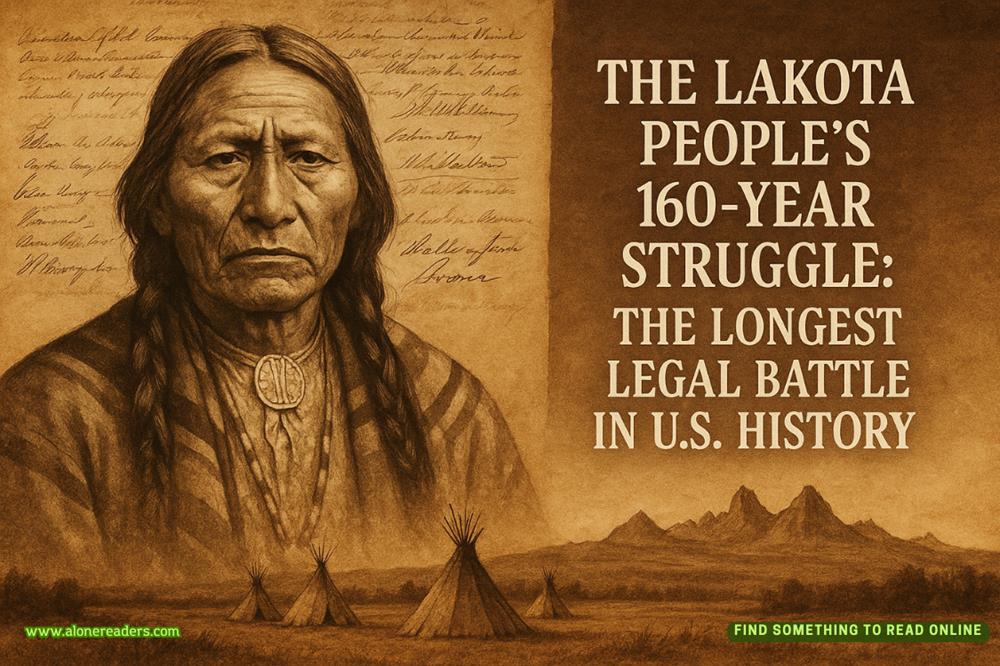
The Lakota people, part of the larger Sioux Nation, have lived for centuries across the Great Plains of North America, primarily in what is today North and South Dakota. Their history is inseparably tied to the land, not only as a source of livelihood but as a sacred inheritance passed down through countless generations. Yet, for more than 160 years, they have been engaged in the longest-running legal battle in U.S. history—a fight for sovereignty, justice, and the recognition of their rights as an independent people. This dispute began with broken treaties, was intensified by the seizure of sacred lands, and continues today as an unresolved struggle between the Lakota Nation and the United States government.
The origins of this conflict can be traced back to the mid-19th century. The Fort Laramie Treaty of 1851 and its revision in 1868 were meant to protect the Lakota and their neighboring nations by recognizing their sovereignty over vast territories, including the Black Hills, an area of profound spiritual and cultural significance. These treaties promised that the United States would respect Lakota land, cease encroachment, and ensure peace in exchange for allowing safe passage for settlers heading west. But as was the case with many Native treaties, promises quickly turned to betrayal once gold was discovered in the Black Hills in the 1870s. The influx of miners, followed by the U.S. military, led to violent conflicts and ultimately to the unlawful seizure of the Black Hills, sparking a chain of legal and political disputes that have never been resolved.
For the Lakota, the Black Hills—Pahá Sápa in their language—are not just a stretch of land but the center of their spiritual universe. According to their traditions, the Black Hills are where life began, where sacred ceremonies must be performed, and where their ancestors’ spirits reside. To lose them was not merely a material dispossession but a profound cultural and spiritual rupture. When the U.S. government seized the area without proper consent, it ignited a legal struggle that has persisted for generations. From the 19th century to the modern day, the Lakota have refused to accept the terms of land seizure and continue to insist on their rights under the treaties that were signed in good faith but dishonored by the United States.
The legal dimensions of this battle reached a turning point in 1980 when the U.S. Supreme Court ruled in United States v. Sioux Nation of Indians that the seizure of the Black Hills had indeed been illegal. The Court awarded the Lakota monetary compensation amounting to more than $100 million at the time, representing the value of the land plus interest. However, in a powerful act of resistance and principle, the Lakota refused to accept the money. For them, the land itself—not financial payment—was the rightful inheritance of their people. Accepting the settlement, they argued, would legitimize the theft and permanently sever their connection to their sacred lands. To this day, the settlement has grown with interest and is worth billions of dollars, but the Lakota still hold firm in their rejection.
This act of defiance illustrates the central theme of the Lakota struggle: independence and the restoration of their rights as a sovereign people. Their legal battle is not solely about property or financial restitution; it is about self-determination. The Lakota continue to press for recognition of their sovereignty under international law, arguing that the treaties they signed with the United States should be regarded as agreements between independent nations. In this sense, their fight is not just a Native American issue but a question of international justice and human rights. The United Nations has, at various times, expressed concern over the treatment of indigenous peoples in the United States, and the Lakota case is frequently cited as a glaring example of ongoing injustice.
Over time, the Lakota struggle has also become a symbol of resilience for indigenous peoples across the globe. Despite poverty, marginalization, and political pressure, the Lakota have maintained their culture, language, and traditions, refusing to assimilate into a system that demands they abandon their identity. Movements like the American Indian Movement (AIM) of the 1970s drew heavily on Lakota activism, particularly during the standoff at Wounded Knee in 1973, which highlighted the ongoing grievances of indigenous peoples in America. Today, the Lakota remain at the forefront of advocacy for land rights, cultural preservation, and sovereignty, inspiring new generations to carry on the fight.
The conflict also highlights the complexities of modern law and indigenous rights. While U.S. courts acknowledge the injustice, they are reluctant to overturn the historical land grab because of the precedent it would set. Returning the Black Hills to the Lakota would mean acknowledging that countless other land seizures across the country were also illegitimate. For the federal government, the implications are enormous, which is why the issue remains unresolved despite legal acknowledgment of wrongdoing. For the Lakota, however, this refusal to restore the land is proof that justice is still denied.
The Lakota’s resistance also raises important questions about the meaning of independence. While full political secession from the United States is unlikely, the Lakota envision a form of autonomy that allows them to govern themselves, protect their sacred lands, and preserve their culture without interference. Their proposals include shared stewardship of the Black Hills, greater political autonomy, and recognition of treaty rights that would enable them to live as they choose, in alignment with their traditions and beliefs. Independence, for them, is less about establishing a separate state in the modern sense and more about reclaiming the dignity and sovereignty that were guaranteed in the 19th-century treaties.
The ongoing legal battle, stretching across more than a century and a half, is a testament to both the endurance of the Lakota and the unresolved contradictions within U.S. history. On one hand, the United States positions itself as a nation founded on liberty and justice, yet its treatment of indigenous peoples continues to expose deep inconsistencies. The refusal to return the Black Hills illustrates the limitations of a justice system that acknowledges wrongdoing but resists meaningful reparations. On the other hand, the Lakota’s persistence shows the strength of cultural survival in the face of overwhelming adversity. They have refused to be bought, refused to be silenced, and refused to surrender their rights, even when offered billions of dollars.
Today, the legal and political battle continues, with the Lakota people seeking new avenues to press their claims in both U.S. courts and international forums. Their struggle has taken on global significance, serving as a reminder that colonialism did not end with the 19th century but continues to shape the lives of indigenous peoples worldwide. The Lakota stand as an example of resistance to erasure, insisting that their identity, sovereignty, and sacred lands cannot be reduced to a financial transaction.
In the end, the story of the Lakota people’s 160-year legal battle is one of defiance, resilience, and hope. While the outcome remains uncertain, their struggle continues to shape debates about indigenous rights, sovereignty, and justice in the modern world. It is a struggle that reminds us of the unfinished business of history and the responsibility of nations to honor their promises. The Lakota’s refusal to surrender their claim demonstrates a powerful truth: that independence is not granted by governments but asserted by peoples who refuse to let their identity and dignity be erased.



 Château de Vincennes: France’s Forgotten Royal Fortress and Medieval Stronghold
 Château de Carcassonne: Europe’s Greatest Medieval Citadel and Fortress
 Château de Chenonceau: The Castle Built by Remarkable Women
 Château de Chambord: France’s Magnificent Renaissance Castle and Architectural Wonder
 Tehri Dam: India's Tallest Dam and the Debate Behind It
 Bhakra Nangal Dam: India's Temple of Modern Development