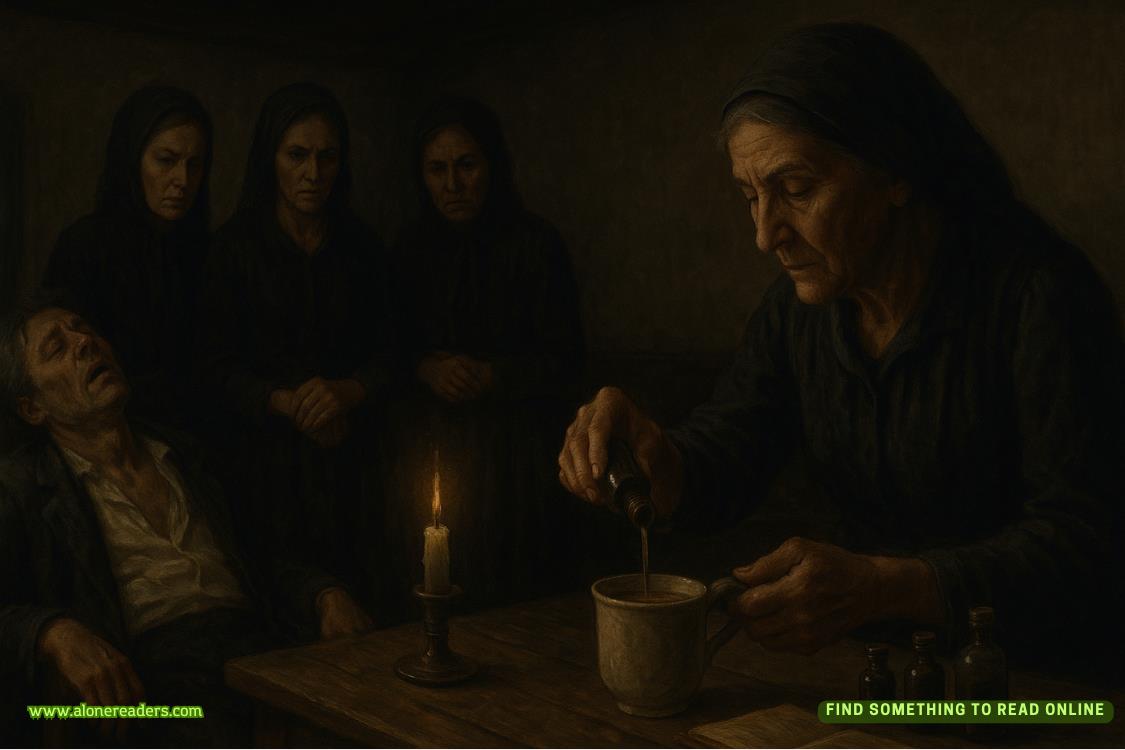
The story of Nagyrév, a small farming community in Hungary, is one of the most chilling chapters in European criminal history. Between 1911 and 1929, dozens of women from this remote village conspired to poison their husbands and other men, leaving behind a trail of corpses and a legacy that still provokes debate today. At the center of this extraordinary case stood a village midwife, Zsuzsanna Fazekas, whose knowledge of medicine and poisons turned her into both a confidante and an enabler of desperate wives.
Marriage and oppression
Nagyrév was a farming community on the banks of the Tisza River, about 130 kilometers south of Budapest. Life here in the early 20th century was marked by rigid traditions. Marriages were arranged, often pairing very young women with older men for reasons of land inheritance and property ties. Divorce was almost impossible, locking women into abusive or loveless relationships.
Absence of authority figures
Unlike other villages, Nagyrév had no resident doctor, priest, or external authority to whom women could appeal. This created a vacuum where the midwife, Zsuzsanna Fazekas, became both healer and confidante. Her role was critical, because she was one of the few people with knowledge of chemicals, remedies, and the preparation of toxic compounds.
Domestic violence and desperation
Accounts from survivors like Maria Gunya, the daughter of a local official, recalled the hidden miseries of village life. Behind closed doors, women faced physical abuse, marital rape, infidelity, and relentless exploitation by their husbands. In such an environment, many wives saw themselves trapped without escape routes. When these women turned to Fazekas, they found not sympathy but a solution: arsenic.
The role of Zsuzsanna Fazekas
Fazekas arrived in Nagyrév in 1911. Almost immediately, mysterious deaths began to occur. She introduced women to a “remedy” that could solve their domestic problems permanently. She manufactured arsenic by boiling down flypaper, creating a deadly yet easily administered poison.
The name “Angel Makers”
The women of Nagyrév later came to be known as the “Angel Makers.” The term refers to women who killed either their husbands or unwanted children, sending them to the “angels.” In Nagyrév, the majority of cases were directed at violent or controlling husbands, though suspicions extended to other male relatives and even lovers who had become inconvenient.
The mechanics of murder
The method was disturbingly simple. A few drops of the arsenic mixture could be stirred into soup, coffee, or alcohol. Death often appeared to be the result of illness, as medical supervision in the area was minimal. Over nearly two decades, the killings continued unchecked, with little scrutiny from outside authorities.
The war years
During World War I, many Nagyrév men were sent to the front. In their absence, Russian prisoners of war were assigned to work in the fields and homes. Several women formed relationships with these prisoners, enjoying a brief taste of independence and companionship outside their arranged marriages.
The return of the husbands
When the war ended and the men returned, the situation deteriorated. Women who had enjoyed years of autonomy suddenly found themselves back under the domination of their husbands. Some also carried the stigma of infidelity, fueling further violence within households. For many, arsenic became not only a weapon of rebellion but also a desperate act of survival.
The first suspicions
The authorities only began to suspect foul play in the late 1920s, when the sheer number of deaths in the village became difficult to ignore. Men were dying in unusual numbers, and their deaths were often preceded by sudden illness.
Exhumations and forensic proof
Investigations led to the exhumation of bodies from Nagyrév’s cemetery. Forensic tests revealed that arsenic was present in an overwhelming majority of the corpses. Of the first 50 bodies examined, 46 contained lethal traces of poison.
The downfall of Fazekas
When police came to arrest Zsuzsanna Fazekas, she immediately realized her fate. Before she could be taken into custody, she drank a vial of her own poison, ending her life. Her death, however, did not end the investigation.
Dozens of women accused
In December 1929, trials began in the nearby town of Szolnok. Around 26 women were put on trial, accused of murdering their husbands, lovers, or relatives. While some denied their involvement, others faced damning evidence from exhumations.
Sentences and punishments
The outcomes varied:
Yet, remarkably, many women denied any wrongdoing, and only a handful admitted their crimes openly.
The scale of the killings
Although the official death toll stood at around 50, later estimates suggested that as many as 300 men may have been poisoned in Nagyrév and surrounding areas. Such figures place the “Angel Makers” among the most prolific serial killers in history.
Freedom from abuse
For many women, murder was seen as the only way out of abusive relationships. Divorce was socially unacceptable, and legal separation was nearly impossible. Poison offered liberation.
Economic motives
In some cases, inheritance and land rights played a role. By eliminating husbands, women could secure property for themselves or their children.
Rebellion and bitterness
The psychological toll of forced marriages, domestic abuse, and war trauma fostered deep resentment. For some, poisoning became an act of rebellion against a patriarchal system that gave them no voice.
Other towns affected
The poisonings were not confined to Nagyrév. In nearby Tiszakürt, exhumations also revealed arsenic in corpses, though prosecutions were rare. This suggested a wider regional pattern of desperate wives resorting to similar methods.
Cultural memory
Over time, the story of Nagyrév faded from Hungarian public memory. For decades, the village carried the stigma of being a place where men feared their wives. Today, little of that unease remains, and the story has become more of a macabre historical curiosity than a living wound.
A bitter legacy
As one observer, Maria Gunya, dryly noted years later, men’s behavior toward their wives in the region “improved significantly” after the poisonings became public knowledge. In its dark way, the crimes left a lasting impact on gender dynamics in rural Hungary.
The case of the Nagyrév “Angel Makers” remains unique in the annals of crime. Unlike most serial killings, this was not the work of a single individual but of an entire network of women driven by shared desperation. It raises uncomfortable questions about how far people will go when trapped in violent, oppressive circumstances without legal or social escape.
Zsuzsanna Fazekas may have provided the means, but the motivations lay deep within the social fabric of the village—patriarchy, forced marriage, and the scars of war. The story is not merely one of crime, but of a society that gave women no other choice. Nagyrév thus stands as a haunting reminder that when injustice festers, even the most ordinary of places can produce extraordinary horrors.

October 25, 2023

January 02, 2025



 Tsunami Stones of the Deep: Reading the Seafloor's Geological Memory
 Storegga Slides: Mega-Landslides That Shaped Coastlines and Changed Prehistoric Europe
 Submarine Canyons: The Grand Canyons of the Continental Shelf and Their Hidden Ocean Worlds
 Seamount Oases: Biodiversity Hotspots in the Blue Desert | Hidden Mountains of the Deep Ocean
 Jeddah Light: One of the Tallest Modern Lighthouses in the World and a Gateway to the Red Sea
 Inisheer Lighthouse: Ireland's Quiet Island Beacon Guarding the Edge of the Atlantic
 The Abu Ghraib Scandal, Iraq, 2004: A Human Rights Disaster That Shook the World
 The Disbanding of the CNRP, Cambodia, 2017: Hun Sen's Clampdown on Democracy and the Reshaping of Cambodian Politics
 The Firing of James Comey, United States, 2017: Trump's Controversial Decision Amid FBI Investigation
 The Rwandan Refugee Crisis, Central Africa, 1994: Aftermath of Genocide and the Humanitarian Catastrophe
 The Most Important Turning Points of the Battle of Hastings (1066)
 Why William Won the Battle of Hastings and Harold Lost: Strategy, Leadership and Fate in 1066
 How King Harold II Died: Facts, Myths, and Historical Debate
 The Battle of Hastings: A Complete Timeline of the Fighting
 High-End Talent Category A Work Permit China 2026: Complete Eligibility, Benefits, Application Process, and Expert Guide
 Cultural Activities Visa Japan 2026 Guide: Complete Eligibility, Requirements, Application Process, and Expert Tips